Get Full Government Meeting Transcripts, Videos, & Alerts Forever!
Get email alerts on the Property Taxes topic
No spam. Unsubscribe anytime.
Assessor explains why Benton City's property-tax rate is low and how the 1% levy cap works
Summary
Benton County assessor staff told the council that Washington's 1% levy-limit caps a city's total property-tax revenue growth, not individual bills, and showed Benton City's 2026 levy calculations (new construction added $14,455.14; administrative refund $1,386.76), leaving the city's levy at about $0.68 per $1,000 of assessed value.
Danielle H., chief deputy assessor for Benton County, told the Benton City Council on April 21 that Washington law limits a city's total property-tax revenue to a 1% increase each year unless voters approve a higher amount.
"The 1% limit is based on the city's total levy, not home values," Danielle H. said, adding that home values can rise or fall independently and that new construction, annexations and state-assessed utilities can provide small, one-time increases without voter approval. She said new construction in Benton City added $14,455.14 to levy capacity last year and pointed out an administrative refund of $1,386.76 that the city did not claim.
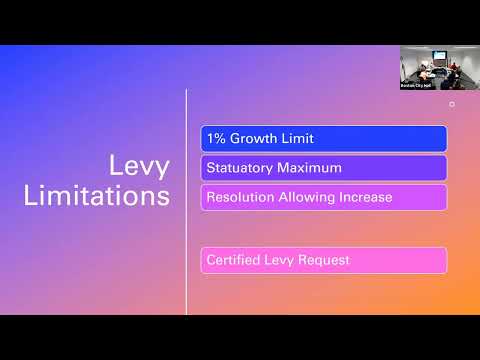
The assessor's office walked council through Levy calculations: start with the highest prior local levy, apply the 1% growth limit, add authorized one-time increases (new construction, annexations, state-assessed utilities), subtract amounts for senior exemptions and special districts, and then divide the certified levy by the district's assessed value to compute a levy rate per $1,000. For Benton City staff showed a final levy rate of roughly $0.68 per $1,000 of assessed value for the 2026 tax year.
Why is the rate low? Danielle H. explained that when assessed values grow faster than the 1% cap, the levy rate can fall even though total levy revenue still increases by the 1% cap. "As values go up, it allows your taxpayers to pay a lesser rate," she said.
Council members asked whether levy lifts for fire districts were typically temporary. Staff said most lifts they have seen remain permanent after voters approve them, and emphasized that any levy lift must be clearly described on the ballot (first-year rate, duration, purpose and whether the final rate becomes permanent). Assessor staff also described multi-year lifts (up to six years) and noted that senior-exemption programs can shift tax burdens to other taxpayers.
Danielle H. recommended that the council consider whether relying on new construction for revenue is sustainable and that the council decide whether to request its certified levy each year or bank capacity for later use. Council members said the historical trend of the city's rate falling as a share of home value is an important educational point for voters but cautioned that ballot language must not mislead.
The presentation closed with staff offering to provide additional data and contacts (including the state Department of Revenue) to explain levy-lift mechanics and implementation timelines. The council thanked assessor staff for the briefing.