Get Full Government Meeting Transcripts, Videos, & Alerts Forever!
Get email alerts on the Adu Policy topic
No spam. Unsubscribe anytime.
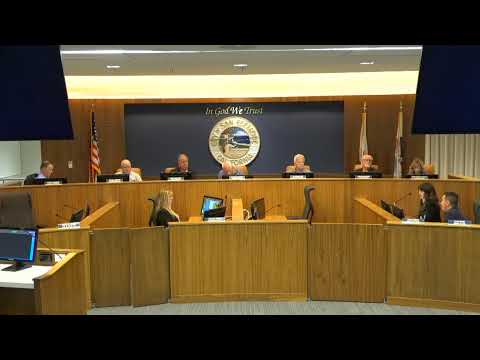
Planning commission sends ADU zoning update to council but flags infrastructure, electrical-service concerns
Summary
The commission recommended that city council consider the staff-proposed ADU ordinance to conform to state law but asked staff to analyze infrastructure and electrical-service implications, and to research what other cities are doing about caps and mitigation.
The San Clemente Planning Commission continued its review of zoning amendment 26-064, a package of edits intended to bring the city's accessory dwelling unit (ADU) rules into alignment with recent state legislation. Staff said the changes reflect new state requirements that limit local controls (including AB462 and SB543) and clarified differences between Government Code §66314 and §66323.
Zach, planning staff, summarized the principal changes: elimination of owner-occupancy and deed-restriction authority in many cases; clarified definitions for ADU and junior ADU (including an explicit 500-square-foot JADU interior-livable-space standard to match state language); and adjustments to parking, architectural-review and permit-pathway provisions to reflect recent HCD comments.
Public commenter Larry Colbertson urged caution about the cumulative local impacts. "When neighborhoods become saturated with ADUs... parking will become increasingly difficult, and our utility infrastructure will be overwhelmed," he told commissioners, asking whether the city could mitigate those outcomes. Commissioners voiced similar concerns about sewer, water and especially electrical service on older homes; several urged staff to study whether the city can lawfully require upgrades to electrical service for new ADUs.
Staff and legal counsel explained that state law constrains some local requirements (for example, in certain situations the city cannot require owner occupancy or deed restrictions), but that building-code requirements (including electrical upgrades where the building code and fire safety dictate) remain enforceable. Commissioners asked staff to evaluate feasible local measures and to examine how peer cities have responded.
Rather than voting against forwarding the ordinance, the commission voted to send the proposed zoning amendment to city council with a formal set of concerns and recommended follow-up: staff should analyze (1) infrastructure thresholds (water/sewer capacity and emergency access) that might warrant limits or triggers, (2) the feasibility and legal parameters of requiring new/upgraded electrical service for ADUs, and (3) whether other municipalities have adopted caps or conditional limits tied to documented public-health, safety, or infrastructure thresholds. The motion passed with one commissioner recorded in opposition.