Get Full Government Meeting Transcripts, Videos, & Alerts Forever!
Get email alerts on the Referendum Finance topic
No spam. Unsubscribe anytime.
Carmel Clay Schools chiefs say SEA 1 cuts could cost district $119 million; board weighs levy scenarios
Summary
District officials and Policy Analytics told the Carmel Clay Schools Board that Indianas SEA 1 will depress assessed values and cut local revenues by an estimated $119 million over eight years, prompting staff to present levy scenarios and examples of program and staffing impacts ahead of planned polling and a June ballot decision.
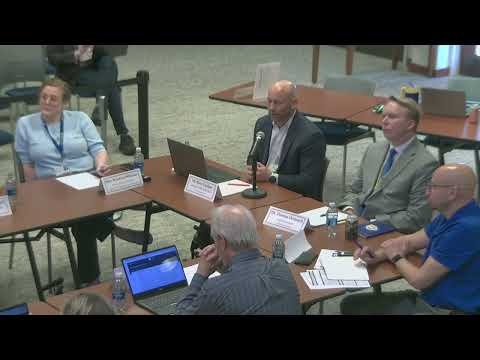
Carmel Clay Schools officials told the board at a work session that changes in Indianas Senate Enrolled Act 1 (SEA 1) will reduce local assessed value and shrink referendum revenue, creating a projected $119 million shortfall over the next eight years.
At the meeting, Mr. Gardner of Policy Analytics walked trustees through SEA 1s main mechanics: the phase-out of the $48,000 standard homestead deduction in favor of a larger supplemental deduction, a new homestead residential credit of 10% up to $300 per homeowner and a higher de minimis business personal-property exemption (illustrated rising from $80,000 to $2 million in 2027). "Anytime we increase deductions, we're going to push down on net assessed value," Gardner said, adding his firms projection that the district will see several years of declining net assessed value before growth resumes.
District financial staff and consultant Roger McMichael (finance lead) and others summarized how the change affects referendum mechanics: assessed-value declines mean the district must set higher tax rates to generate the same levy revenue. Staff presented combined operating-and-safety referendum scenarios that would allow the district to replace lost levy dollars; those scenarios produce higher maximum ballot rates than voters have seen historically. Mr. McMichael told the board the district is modeling multiple levy options and will ask the board to finalize any ballot language and maximum rate by June.
Why it matters: staff said SEA 1 effects are structural rather than one-time. District leaders confirmed the earlier $94 million figure was incomplete and that the correct estimate of lost referendum revenue is $119 million across eight years — an average shortfall of roughly $15 million annually. "That cannot be remedied with situational reductions," McMichael said, noting that personnel makes up about 96% of operating budgets.
Board members pressed staff for concrete illustrations of impact. McMichael used transportation as an example: cutting 16 bus drivers equates to roughly 2,000 additional students lacking bus service, added to an existing ~1,500 who already do not have bus service. He cautioned that specific cut-lists before a formal decision would be premature and risk mischaracterizing priorities. "We don't have $15 million worth of 'waste,'" he said, explaining the district has already pursued efficiencies and pointed to tighter per-pupil utility and wellness-center savings as examples of previous cost management.
Staff also highlighted longer-term budget mechanics that affect messaging: the states shift from a "general fund" to an "education fund" required that about $18 million of expenses be classified differently, which then changes how some costs appear in operations versus education accounts.
On timelines and public engagement, the board heard from Steve Clink, the districts referendum consultant, who said his team will poll the three levy scenarios shown in the presentation. Staff emphasized that, if voters approve a maximum rate, the board still sets the actual levy annually; the June timeframe was identified for a final board decision on ballot wording and maximum rates.
Trustees repeatedly urged clear communication with voters, asking staff to pair the technical modeling with plain-language examples of what different levy choices would mean for daily services (instructional assistants, special-education supports, SRO coverage, or bus routes). Several trustees asked staff to include special-education pressures in public materials, citing expected increases in student needs as Medicaid and ABA therapy limits change.
No formal vote or referendum question was taken at the meeting. The board adjourned at 8:08 p.m., with staff to continue polling and refine levy scenarios ahead of the boards decisions later this spring.
"The math has changed," McMichael said. "SEA 1 has created that structural loss for the district."
Provenance: Topic began when Policy Analytics first presented SEA 1 changes (topicintro: SEG 128) and the board discussed scenarios and the $119 million estimate (topfinish: SEG 1743).