Get Full Government Meeting Transcripts, Videos, & Alerts Forever!
Get email alerts on the Education Budget topic
No spam. Unsubscribe anytime.
Conestoga Valley officials warn of $8.2M structural gap in 2026–27 budget; recommend using full Act 1 index
Summary
District business manager told the board the 2026–27 baseline budget shows about an $8.2 million deficit driven by rising salaries, health costs, special education and debt service; staff said they plan to budget the full 3.5% Act 1 index and pursue grants to reduce capital costs.
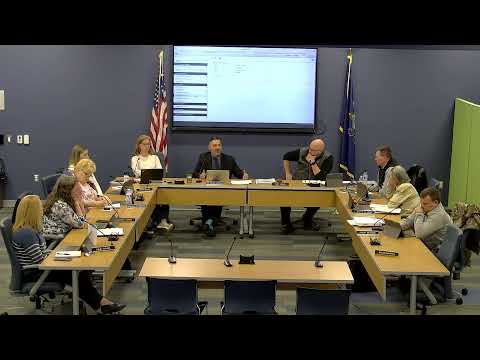
Conestoga Valley’s finance staff delivered a detailed early forecast for the 2026–27 budget on April 20, warning of a large structural deficit and recommending the board budget conservatively while pursuing grant funding for capital projects.
"We budgeted a planned $1.2 million deficit [for 2025–26], and looking at our projections right now it does appear we're going to be in that ballpark, maybe about $1.5 million," said Mrs. Huninger during the board’s budget update. She said the initial 2026–27 budget without adjustments shows a roughly $8.2 million deficit.
Huninger cited several ongoing cost drivers: salary increases (the teacher contract pattern drives a roughly 4% increase for administrators and support staff), rising health‑care claims, special‑education costs, cyber‑tuition obligations and increasing debt service (noted to be rising from about $8.0 million to $8.5 million). She said the district has included 100% of the governor’s proposed ready‑to‑learn adequacy supplement—about $1.4 million—in the 2026–27 projections.
On capital needs, the presentation described a $3.8 million list that includes high‑school roof restoration and replacement of two high‑school chillers. Huninger said the district has applied for the Pennsylvania school facility improvement grant and intends to pursue RACP/RACP‑type competitive funds (RCAP/RACP) to offset costs, but said grant awards are uncertain.
Board members pressed for clarity about local real‑estate growth and timing of new assessments; Huninger said she was reluctant to assume near‑term assessed‑value gains from in‑progress construction projects and that more data are needed before including projected growth in revenue estimates.
The finance presentation emphasized the Act 1 index limitation and recommended adopting the full 3.5% millage index for one or more years to avoid drawing down fund balance. "If we don't we are going to have a structural deficit," one director warned during the discussion; Huninger and other staff said they expect to propose using the full index for the near term.
The board discussed grant strategies and capital‑project prioritization; no final millage motion was taken at the meeting. Staff said more detailed budget materials will be presented in coming weeks as they refine revenue and expenditure assumptions.