Get Full Government Meeting Transcripts, Videos, & Alerts Forever!
Get email alerts on the Transportation topic
No spam. Unsubscribe anytime.
St. Peter council accepts feasibility study, schedules hearing for Minnesota Avenue (Highway 169) improvements
Summary
The St. Peter City Council accepted a Bolton & Mink feasibility study for Minnesota Avenue (Highway 169) improvements and set an improvement hearing for Aug. 25. The $7.2 million project would be mostly funded by MnDOT with an estimated $2.06 million city share, part of which would be recovered through property assessments.
The St. Peter City Council on July 28 accepted a feasibility study and called a public hearing for proposed improvements to Minnesota Avenue (Highway 169) between Chestnut/Union and Jefferson, moving the project a step closer to construction while reserving municipal consent for later decisions.
Pete, a city staff presenter, said the total estimate for the reconstruction is about $7.2 million, with MnDOT covering roughly $5.14 million and the city responsible for about $2.06 million. He told the council the city’s share would be partially recovered through assessments and that Bolton & Mink had deemed the project “necessary, cost-effective, and feasible.”
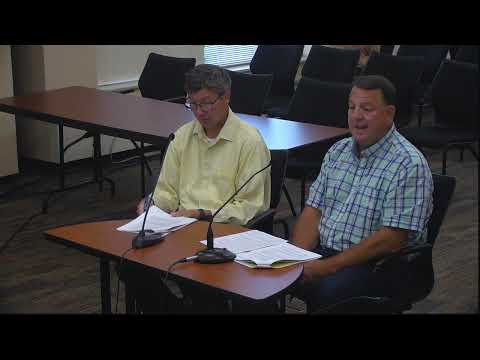
Resident and business owner Mark Plotz, who addressed the council during public comment, urged officials to allow meaningful public input before the design is finalized. “If you put your public comment period once the design has already been decided, I guess the question is what's the point of showing up?” Plotz said, adding a warning about speed studies: “Never ever ask for a speed study because in Minnesota, when you do a speed study, the speed limit only goes in one direction, and that's the one that we don't want.”
The proposed improvements include a new concrete roadway, curb-and-gutter, sidewalks, landscaped medians with limited access and two full-movement intersections, replacement of vitrified-clay sanitary mains with PVC, selective replacement of water services and curb stops, stormwater drainage work and median irrigation and lighting. Staff said medians would be similar to those at Minnesota Square Park and would include tree plantings and electrical receptacles for holiday lighting.
Staff provided a cost breakdown identifying roughly $4.6 million for the concrete roadway and median work, about $424,000 for sanitary improvements, about $359,000 for water main work, and an estimated $557,000 for storm sewer work (the latter to be prorated between MnDOT and the city). Staff also noted that many proposed city costs would be eligible for Municipal State Aid (MSA) funding.
Officials discussed assessment mechanics and financing. Staff said the council would hold an informational meeting for impacted property owners on Aug. 19 and a formal improvement hearing on Aug. 25 where property owners can contest assessments. City staff emphasized that accepting the feasibility report does not authorize construction; rather, it enables the assessment and hearing process and preserves bonding options under Minnesota Statute chapter 429. City staff estimated construction would likely occur in 2027 with rate impacts to enterprise funds most likely appearing in 2028 if debt is issued to cover city shares.
Council members voted unanimously to accept the feasibility study and call the public improvement hearing. Several members said they supported moving the process forward while reserving decisions about municipal consent and detailed design items such as traffic controls and speed limits for later consideration.
The council’s next formal step is the Aug. 25 improvement hearing. Staff said they will mail individual notices to affected property owners and provide the informational meeting on Aug. 19.