Get Full Government Meeting Transcripts, Videos, & Alerts Forever!
Get email alerts on the Budget topic
No spam. Unsubscribe anytime.
CFO outlines $1.1M shortfall, health-plan costs and state funding plea; board approves 10-year capital plan
Summary
CFO Tom told the Mukwonago Area School District board the district faces a projected $1.1 million shortfall (updated for health-plan renewal assumptions), reviewed health-plan cost drivers and staffing ratios, and said the district has asked state lawmakers for special-education reimbursement; the board approved a 10-year capital plan by motion.
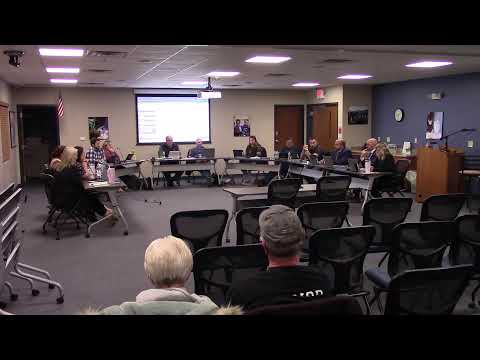
Chief Financial Officer Tom presented a district financial update at the March 23 meeting that laid out revenue constraints, health-plan cost drivers and a projected budget shortfall for 2026–27.
Tom said the district’s $70 million budget relies heavily on state aid and local property taxes subject to Wisconsin’s revenue-limit formula and that Mukwonago remains in a low-funded position relative to many peers. He walked the board through long-term declines in per-pupil state funding relative to inflation and presented comparative charts showing Mukwonago near the lower end of funding among peer districts.
On health care, Tom summarized the district’s move from a fully insured to a self-insured model and reported rising costs driven in part by high-cost claimants: the district had 19 such claimants in the first year (average paid cost ~$87,000) and 24 in the most recent year (average ~$162,000), representing roughly $3.8 million in spend. He said the district is steering employees to tier-one preferred providers, has added a nurse navigator and is targeting a 40–50% tier-one utilization rate to control costs. Preliminary renewal estimates were described as 14–18%; the CFO said that raising the assumption to 15% increases the projected deficit to about $1.1 million.
Tom also reviewed staffing ratios and a menu of required versus optional programs. He noted the district has already used recent revenue increases to raise teacher pay and expand health benefits and said there are no ‘‘easy’’ program reductions: required services are non-negotiable and optional enrichment (ALP, band, orchestra) brings competing stakeholder claims. He said the district sent a February 17 letter to state legislators asking that a portion of projected state surplus be directed to special-education reimbursements, which would materially reduce next-year budget pressure if enacted.
Board action: On a separate motion, the board approved the district’s proposed 10-year capital plan (motion made, seconded and approved by voice vote). The CFO said some capital projects (kitchen equipment upgrades cited earlier in the meeting) could be funded from existing fund balance if the board directs staff to cost them out.
Why it matters: The district projects a near-term budget gap driven by health-cost inflation and declining enrollment; the choices the board makes this spring—spending reductions, revenue strategies, or using reserves—will determine program availability in 2026–27.
What’s next: Staff will return in April with tightened health-plan renewal figures, menu/capital cost estimates for food-service improvements, and more detailed scenarios for right-sizing the 2026–27 budget. The board will consider final budget votes in May.