Get Full Government Meeting Transcripts, Videos, & Alerts Forever!
Get email alerts on the Elections Open Records topic
No spam. Unsubscribe anytime.
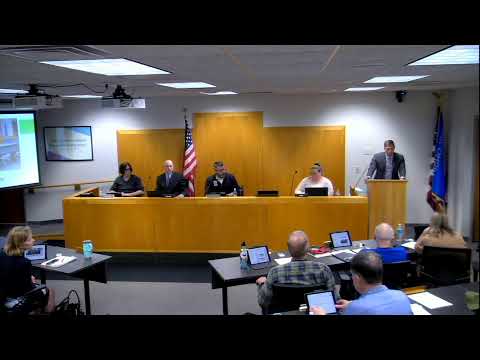
County clerk, deputies brief board on election timelines, open‑meetings and public‑records rules
Summary
County Clerk Jacqueline Sadler reviewed election deadlines, Clear Ballot testing and county canvas procedures; deputy corporation counsel explained open‑meetings and public‑records law and cautioned supervisors about walking quorums and using county email for public business.
County Clerk Jacqueline Sadler walked supervisors through the practical timelines and statutory requirements that govern local elections and post‑election certification.
Sadler detailed the compressed schedule for the August partisan primary and the November general election: the state certification of candidates in early June constrains ballot programming and forces tight windows for clerks and printers (the clerk noted a June 10 certification date as the point after which ballots can be finalized and mailed by required municipal deadlines). She described Clear Ballot components (tabulator, ADA touch‑screen, ballot‑creation tools and post‑election image review) and explained why the county performs county‑level public testing of equipment prior to each election.
Deputy corporation counsel Brady Sidz summarized open‑meetings law (Wis. Stat. ch. 19.81), the statutory requirement to give public notice and the 'showers' test (government business + number of members). He warned supervisors about walking quorums — serial private communications that can effectively predetermine a public vote — and reviewed permitted closed‑session categories (employment evaluation, property negotiations, litigation strategy) and the procedural requirements before going into closed session.
Deputy Sam Rener then discussed public‑records rules: the broad presumption of disclosure, what counts as a government record, and practical guidance for supervisors to avoid inadvertent disclosure (use county email only for county business; do not do county business on personal email; social‑media postings and staff emails can be records depending on content and context). Rener emphasized the office is available to help when formal records requests arrive.
What happens next: supervisors were advised to coordinate with county counsel and the clerk’s office if they are unsure about closed sessions, records requests, or election timing; no policy changes were adopted at the meeting.