Get Full Government Meeting Transcripts, Videos, & Alerts Forever!
Get email alerts on the Data Centers topic
No spam. Unsubscribe anytime.
Residents urge Chippewa County to set rules for data centers as board hears economic‑development briefing
Summary
Multiple residents told the Chippewa County Board they opposed large data centers, citing high electricity and water use and few long‑term local jobs; the county’s economic development director said staff will screen leads and will not pursue projects that fail to create jobs or tax base.
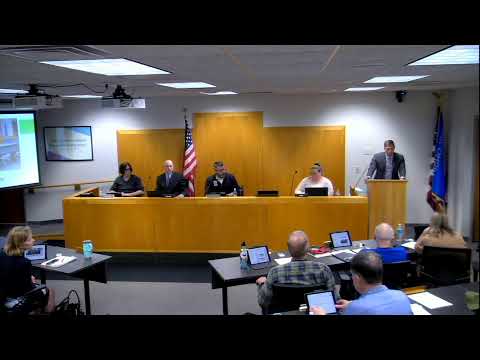
Several residents used the public‑comment period at the Chippewa County Board orientation to press supervisors to adopt proactive rules before data‑center proposals arrive.
“My name is John Kovaleeski,” resident John Kovaleeski said, and warned that data centers “consume a large amounts of power,” citing a proposed Port Washington facility he said would draw roughly 1.3 gigawatts and could require multiple large generating units. He also raised water‑use and electricity‑price concerns from other states with high data‑center concentration.
Other speakers echoed calls for careful planning. Jessica Raichel urged the board to “walk decisions full circle” and to protect fertile farmland and supply‑chain resilience. Danny Atkinson and AJ Larson warned of boom‑and‑bust development patterns that leave communities with large facilities but few sustaining jobs after construction. Sabria Baker asked the board to require enforceable reclamation and stronger penalties so taxpayers aren’t left paying cleanup costs.
Blaine Halverson, representing a statewide coalition called Great Lakes Neighbors United, recommended concrete steps: require transparent application materials, build a detailed due‑diligence checklist, control the review tempo so communities are not rushed, and pursue regional coordination and site visits to places that host data centers.
The board then heard a longer “Economic Development 101” presentation from Charlie Walker, the county’s economic‑development manager. Walker said the office treats attraction like a funnel: it fields leads, screens them against county goals (long‑term jobs and tax base), and advances only proposals that fit that gateway. “If it doesn't hit that gateway, I'm not involved in that,” Walker said, explaining why his office sometimes declines energy‑intensive projects that would not generate the county’s desired economic returns.
Walker also outlined broader trends — bio‑refineries, food and dairy processing, and continuing interest in data centers — and urged supervisors to consider zoning, application requirements and regional coordination if the county decides it wants to entertain large data‑center proposals.
What’s next: no formal policy was adopted at the meeting. Speakers urged the board to return a clear, public‑facing regulatory path (application standards, environmental and reclamation safeguards, and enforceable penalties) before any developer negotiations proceed.