Get Full Government Meeting Transcripts, Videos, & Alerts Forever!
Get email alerts on the Water Supply topic
No spam. Unsubscribe anytime.
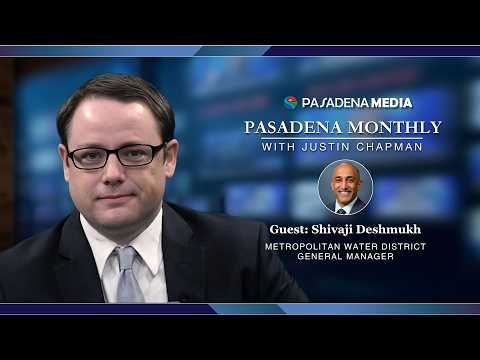
Metropolitan Water District general manager urges regional cooperation on Colorado River, outlines storage and local supply plans
Summary
Shivaji Desmouth, general manager of the Metropolitan Water District, told Pasadena Monthly that Metropolitan supplies about half of water for 19 million people across six counties, supports a seven‑state Colorado River consensus and is weighing storage, recycled water and conveyance projects to boost resilience.
Shivaji Desmouth, general manager of the Metropolitan Water District of Southern California, told Pasadena Monthly that Metropolitan provides roughly half of the imported water for about 19 million people across six counties and is pursuing a mix of storage, recycled supplies and conveyance projects to bolster reliability.
"Metropolitan provides about half the supply to these 19 million residents," Desmouth said, describing the agency as the nation's largest wholesale water district. He said Metropolitan is both a major customer of the State Water Project and a long‑standing user of Colorado River supplies, and that the agency partners with 26 member agencies to develop local drought‑resistant supplies such as groundwater and recycled water.
On the Colorado River, Desmouth said the river supports roughly 40 million people across seven U.S. states, 30 tribes and two countries and that operating guidelines set to expire by year‑end require agreement among the basin states. "Metropolitan stands committed to support a seven‑state consensus," he said, adding that California also needs the ability to store water in Lake Mead behind Hoover Dam and pursue exchanges across the Southwest to maintain reliability.
Desmouth highlighted operational threats that complicate delivery: invasive mussels clog intake systems and pumps, subsidence on the State Water Project could damage conveyance infrastructure, and the region's changing climate shifts storage and timing of runoff. He said Metropolitan is pursuing a climate adaptation master plan to prioritize projects and identify financing.
Major projects discussed include the Sites Reservoir, potential Delta conveyance (a tunnel under the Sacramento–San Joaquin Delta), the Pure Water Southern California recycled water program in Carson, and conveyance improvements such as the Sepulveda feeder project to improve the agency's ability to move Colorado River water to different parts of the service area. "We've committed to building infrastructure projects to essentially move more Colorado River to the west part of our service area," he said, referencing recent project groundbreakings.
Desalination remains under evaluation. Desmouth cautioned that ocean desalination provides significant supply but requires energy to remove salt and incurs conveyance costs when demand is distant from the ocean source, so board policy choices will determine the agency's role in desalination.
Asked about how residents can get involved, Desmouth praised Pasadena for high water‑use efficiency and encouraged listeners to visit Metropolitan's website for conservation guidance and project information.
The interview focused on planning and options rather than new binding agreements; Desmouth said policy decisions on which projects to fund and pursue will be made by Metropolitan's board.