Get Full Government Meeting Transcripts, Videos, & Alerts Forever!
Get email alerts on the Education Budget topic
No spam. Unsubscribe anytime.
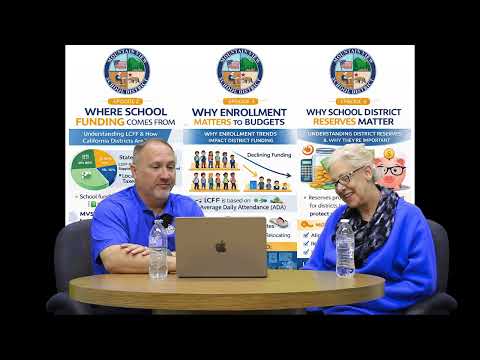
Mountain View school officials explain how enrollment shapes district funding
Summary
District leaders on the Mountain View School District podcast said California school funding is tied to average daily attendance (ADA), so enrollment declines reduce revenue; officials outlined staffing alignment, program reviews and long-range planning as responses.
Mountain View School District leaders laid out why student enrollment is central to the district’s budget and described steps the district is taking to respond to declining counts.
On the district podcast Just Saying, Dr. Darren Degenkolb, associate superintendent for business services and strategic planning, said, “School funding in California is largely based on ADA, or average daily attendance.” He added that “when enrollment declines, district funding declines,” explaining the direct link between attendance and revenue.
Why it matters: ADA-based funding means per-student revenue follows enrollment trends, so sustained drops can reduce money available for staffing and programs. District officials said that, to protect educational services, they are focusing on aligning staffing to current enrollment, reviewing program costs and seeking operational efficiencies.
Causes identified: Officials attributed enrollment declines to broader statewide trends, including changing demographics, lower birth rates, housing-affordability challenges and families relocating out of state. The episode did not provide district-specific enrollment counts or dollar amounts.
Response strategies: Degenkolb and Lisa Lu, senior director of fiscal services, said district responses typically include adjusting staffing levels to match student counts, reviewing and prioritizing programs based on cost and impact, and engaging in long-range financial planning to maintain fiscal stability. No formal staffing actions or budget changes were announced in the episode.
Next steps and resources: Hosts urged listeners to consult the district website, board meeting updates and the weekly newsletter for more detailed information about fiscal stabilization and any forthcoming budget actions.
The podcast episode served as an explanatory briefing; there were no votes, motions or formal district decisions recorded during the conversation.