Get Full Government Meeting Transcripts, Videos, & Alerts Forever!
Get email alerts on the Grant Making topic
No spam. Unsubscribe anytime.
Knoxville council workshop reviews grant programs, seeks clearer scoring and budget transparency
Summary
City Council held a workshop on the mechanics and oversight of Knoxville's grant-making programs, reviewing program types, eligibility rules, timelines and budget links and raising council concerns about scoring rubrics, fiscal sponsors and the timing of budget appendices.
Knoxville's City Council convened a workshop to walk through the municipal grant-making process and several departments' programs, with staff outlining eligibility rules, funding sources and reporting requirements while council members pressed for clearer scoring criteria and earlier public budget transparency.
Vice Mayor Fugat opened the session and described the purpose: "grant making is a large and complex and multi-ep department, um, process for the city of Knoxville," asking members to hold questions for the end of the presentation as staff explained program mechanics across departments.
Kron Smith, deputy director of finance, told the council the city relies principally on three governing documents when making appropriations: the City Code (Division 2, community agency appropriation guidelines), Tennessee statute TCA 6-54-11 and the finance department's grant-management policy. Smith said the city uses three main funding sources for grants: city budget allocations, state pass-through dollars and federal grants, and that most city grant programs require proof of Tennessee registration, a 501(c)(3) designation, a recent audit or annual report and a W-9 — or the use of a fiscal sponsor where those documents are unavailable.
Department directors then described individual programs. Parks and Recreation Director Cheryl Elely said challenge grants (a longstanding 25-year program) typically award up to about $3,000 on a reimbursement basis with a 50% match and are reviewed by a small committee. Director Middlebrooks, representing the Office of Community Safety and Empowerment, described safety-focused grants for youth and violence-prevention work, noting "We have a total budget of $250,000 for our safety grants" and that Opportunity Youth engagement awards can reach $40,000 while Youth Violence Prevention Week microgrants top out at $3,000.
Staff also reviewed Empower Knox grants (an $85,000 pool this year, with maximum cohort awards of $10,000 and event grants up to $1,500), African-American Equity Restoration Task Force grants (a $150,000 program with $20,000 maximum awards intended for East Knoxville), neighborhood small grants and micrgrants ($20,000 total across those programs) and the long-standing community agency grants including opioid-abatement funding (staff said FY2025-26 opioid-related grants totaled just over $2 million).
Housing and Neighborhood Development staff summarized federal entitlement programs the city administers, including Community Development Block Grants (CDBG) and the Emergency Solutions Grant (ESG), stressing those programs' different compliance and reporting requirements and how HUD's consolidated plan shapes eligible uses.
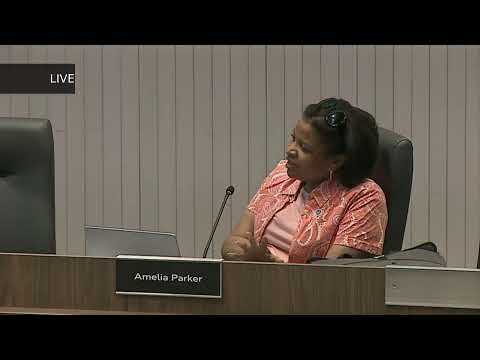
Council members used the workshop to press staff on process improvements. Councilwoman Parker asked when the appendix listing award amounts for community agency grants will appear in the budget materials, saying the agenda item should be complete and available to the public; staff said the appendix will be released with the budget and reiterated that the budget documents will be posted online. Multiple council members asked for more objective scoring or a points-based rubric and clearer feedback to unsuccessful applicants so organizations know how to improve future submissions; staff said each program has its own review criteria tied to project goals and agreed to provide clearer guidance and consider more explicit front-end scoring information.
Council members also raised operational issues: capping fiscal-sponsor fees to protect small grantees (members suggested research-based caps in the 3—% to 5—% range for simple pass-through arrangements), coordination between homemakers and task-force programs to leverage housing and blight-remediation work, and persistent governance concerns about the task force's appointment process and meeting attendance. Staff confirmed the task force itself is not a separate fund and that its grants come from a line item in the Office of Community Safety and Empowerment budget.
Staff repeatedly stressed that program timelines are set to match community needs and operational capacity; they said a public-facing grants calendar on the city website will show application open dates and that they will add application close dates as requested. The vice mayor and staff also reminded council that the mayor's State of the City address and the formal budget release are imminent and that legislative budget hearings are scheduled for May 7.
The workshop ended after roughly two hours with no formal council votes taken. Council members instructed staff to return with clarifications on scoring, documentation to support fiscal-sponsor recommendations, and the budget appendix once public release occurs.