Get Full Government Meeting Transcripts, Videos, & Alerts Forever!
Get email alerts on the Domestic Violence Firearms topic
No spam. Unsubscribe anytime.
House approves compliance hearings to enforce firearm removals after domestic-abuse orders
Summary
House File 4075 creates a 10-day compliance process and potential warrants to enforce firearm transfers ordered in domestic-abuse or child-abuse cases, following lengthy debate over due process, storage fees and federal protections; the House passed the bill 111–21.
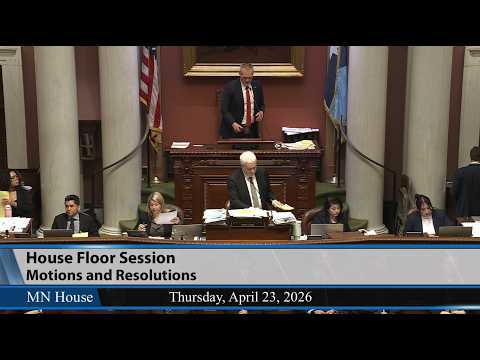
The Minnesota House on April 22 approved House File 4075, which establishes a compliance hearing process to verify that firearms are removed or transferred after court orders related to certain domestic-violence or child-abuse convictions and protection orders.
Representative Scott, who carried the bill, said the measure closes a long-noted enforcement gap: judges issue orders to remove firearms, but in many counties the transfers and follow-up hearings were not taking place. "If you're not a domestic abuser, you have nothing to worry about," Scott said, describing a 10-day period for transfer to local law enforcement, a federally licensed dealer, or a non-cohabiting third party and noting that failure to comply could lead to arrest warrants and contempt proceedings.
Supporters including Representatives Pinto, Mueller and others framed the bill as a victim-protection measure that corrects gaps identified since a 2015 law and in later task-force work prompted by tragedies. Representative Pinto praised bipartisan work and called the bill a straightforward way to keep guns from people the courts have found to be dangerous.
Opponents raised constitutional and practical concerns. Representative Davis warned the bill could create administrative burdens and put law enforcement in the middle of transfers, raised questions about Fourth Amendment implications and criticized provisions allowing storage fees that could amount to de facto forfeiture for those unable to pay. Members also discussed protections in the bill for self-incrimination and limits on public disclosure of serial numbers and related transfer affidavits.
After extended debate — including personal testimony about neighborhood threats and the limits of prior enforcement — the House passed HF4075 on third reading by a recorded vote of 111 yeas to 21 nays.
What’s next: Sponsors said the bill aims to create a uniform compliance mechanism across counties; questions about storage fees, administrative costs and Fourth Amendment limits may prompt future technical fixes and agency guidance if the bill becomes law.