Get Full Government Meeting Transcripts, Videos, & Alerts Forever!
Get email alerts on the Technology Ai Deepfakes topic
No spam. Unsubscribe anytime.
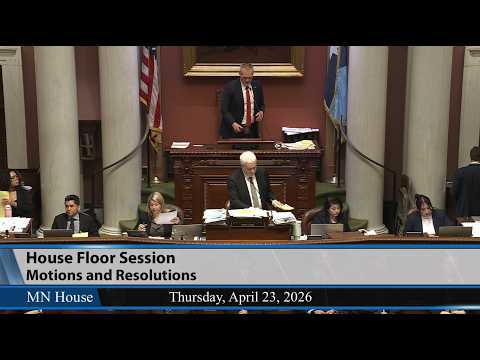
House passes ban on AI "notification" deepfake features after heated floor fight over age-verification amendment
Summary
The House approved House File 1606 on April 22, 2026, banning app and website features that generate nonconsensual sexually explicit AI imagery. An amendment to add age-verification requirements for commercial explicit sites produced a tie vote and failed; the underlying bill passed 132–1.
The Minnesota House on April 22 passed House File 1606, a bill that would prohibit so-called "notification" AI features used to produce nonconsensual sexually explicit images and videos, after a contentious floor fight over a late amendment that sought to add age-verification measures for adult sites.
Representative Robert Hansen, the bill’s author, said the technology has created "an alarming rise" in AI-generated child sexual abuse material and nonconsensual deepfakes. "We need to ban notification features because they allow users to create non-consensual, unauthorized deepfakes of sexually explicit content," Hansen said on the floor, citing evidence that AI-generated child sexual abuse material increased dramatically in recent years. She told colleagues the bill would turn off the features in Minnesota, bar advertising of apps that offer them and create enforcement avenues for violations.
Supporters described the bill as preventive — a statutory tool that aims to stop victims from being created by technology rather than merely treating harm after the fact. Representative Bahner, who said she herself had been targeted by similar imagery in a workplace incident, urged colleagues that "there is no innocent reason to have this tool," warning lawmakers that the consequences for victims can include PTSD and job loss.
The floor’s fiercest debate centered on a germane amendment offered by Representative Big Bird that would have required certain commercial sites that host explicit content to verify users’ ages, restrict access for minors and impose auditing and privacy rules for verification systems. Big Bird and other proponents framed the amendment as a way to protect children online by bringing digital safeguards in line with long-standing limits on minors’ access to physical adult materials.
Opponents—most prominently Representative Hansen—argued the amendment was not consulted with survivor advocates who had driven the original bill, risked muddling the underlying nonconsensual-content focus and introduced new fiscal and constitutional questions on short notice. Hansen told the chamber she had not been consulted on adding the amendment and asked members to reject it to keep the bill narrowly focused on nonconsensual AI features.
The amendment produced a tie roll call, 67 yeas and 67 nays, so it did not prevail. After additional debate about scope, costs and enforcement, the House approved the underlying HF1606 on third reading, 132 yeas to 1 nay.
What’s next: The bill as passed will be sent to the Senate for consideration and, if approved there, to the governor. Supporters said the statute is preventive in intent; opponents signaled further constitutional and implementation questions could follow in later sessions or judicial review.
Exact vote and procedural note: The Big Bird amendment failed on a 67–67 roll call recorded on the floor. HF1606 passed third reading later the same day, recorded as 132 yeas and 1 nay.