Get Full Government Meeting Transcripts, Videos, & Alerts Forever!
Get email alerts on the Budget topic
No spam. Unsubscribe anytime.
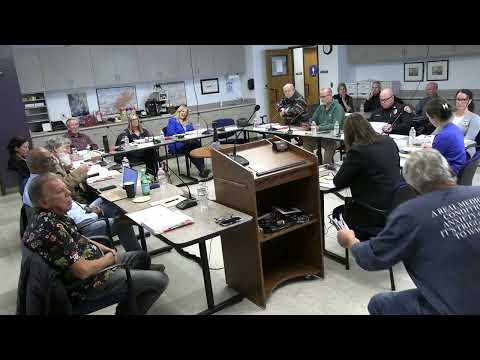
Big Bear Fire Authority rejects proposed FY2025–26 budget amendment after heated debate
Summary
The Big Bear Fire Authority considered a proposed amendment that would reduce roughly $1.24 million in budgeted property-tax revenue and accept about $128,900 from the Fire Protection District to balance the year; after extensive discussion about reserves, transparency and JPA obligations, the motion failed on a split roll-call vote.
The Big Bear Fire Authority on April 14 considered a staff-backed amendment to its FY2025–26 budget that would eliminate about $1.24 million in budgeted property-tax revenue and accept roughly $128,900 from the Big Bear Lake Fire Protection District to produce a zero bottom line while maintaining current service levels.
Finance Officer Kristen told the board the package was prepared from budgeted projections and that the authority is about 67% through the fiscal year, with total revenues at about 58% and expenses within roughly 2% of budget. Staff warned that if projected tax receipts were not passed through as in the original budget, the authority must adopt an amendment to avoid an auditor finding an out‑of‑balance budget at fiscal close.
The finance committee had asked the board to consider reducing property-tax revenue in the authority’s budget by approximately $1,244,292 to align more closely with a 2012 joint-powers agreement (JPA) cost-sharing outline and to accept an additional $128,901 contribution from the Fire Protection District to cover the gap. The committee unanimously supported bringing the proposed amendment to the full board for consideration.
Directors split over the substance and purpose of the amendment. Several directors argued the shortfall should be addressed from reserves rather than by asking an additional contribution of district funds; others said adopting the amendment would make long-standing disparities visible and preserve current service levels without immediate cuts.
Board members repeatedly returned to the same facts: staff described the numbers as budget projections that will be reconciled when property-tax installments are posted in mid‑July, and that the amendment is an accounting change to align the adopted budget with expected revenue flows rather than a change to day-to-day services. One director summarized the staff point as: “This plan will allow us to continue operations as they are,” while others urged broader governance changes to the JPA to avoid recurring imbalances.
The motion to adopt the proposed amendment — described on the record as eliminating about $1.24 million in budgeted property tax revenue from the authority and accepting roughly $128,901 from the Fire Protection District to reach a zero bottom line — was moved and seconded. The board then took a roll-call vote. Several named directors voted no and several voted yes; the motion failed on the board floor and did not pass.
After the vote, directors discussed next steps and the options available if the expected tax receipts are not passed through by other agencies. Staff said that if the money is not received, the authority could adopt an amended budget showing a deficit and draw from reserves if necessary, but doing so would generally require the higher vote threshold that applies to budget revisions.
The board did not adopt the amendment and left in place the previously adopted FY2025–26 budget. Several directors requested the JPA be revisited at a future publicly noticed meeting so the membership can consider structural changes and the distribution of tax revenues going forward.
What’s next: The authority’s next regular meeting is scheduled for May 12, 2026. Staff said it will provide follow-up figures and clarifications requested by directors, including a calculation of the net amount one agency would pay relative to the other under the proposed amendment.