Get Full Government Meeting Transcripts, Videos, & Alerts Forever!
Get email alerts on the Land Use topic
No spam. Unsubscribe anytime.
Zoning board rejects developer’s 12‑home plan for White Oaks Road, cites lack of hardship
Summary
After substantial public opposition, the Zoning Board denied a variance request for a 12‑home cluster subdivision at 238 White Oaks Road, finding the application failed the required hardship test and would alter the rural character of the road.
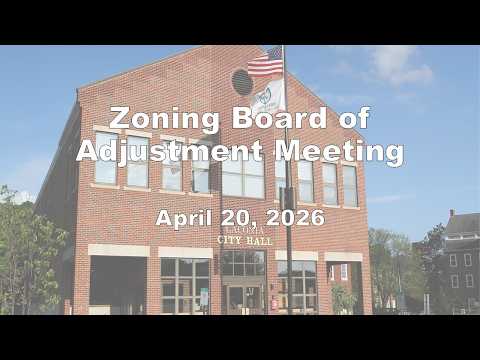
The Laconia Zoning Board of Adjustment on April 20 denied an application seeking a variance to develop 12 single‑family homes at 238 White Oaks Road, concluding the submission did not meet the five legal criteria for a variance—most notably the requirement that denial would cause an unnecessary hardship.
Attorney John Cronin presented the 12‑home cluster plan and said the applicant would be willing to adopt several neighborhood protections, including relocated garages, buffers and a berm. Cronin argued sewer and water availability and lot depth make the parcel difficult to subdivide into frontage lots and that a cluster layout would be reasonable.
A sustained public comment period followed. Dozens of nearby residents described White Oaks Road as a rural corridor that zoning was designed to protect, warned of traffic and safety impacts and said the proposed density would markedly change neighborhood character. Glenn Joyce, an immediate abutter, told the board, “Five homes that fit that plot would be sufficient. Not 12.” Other neighbors urged denial on grounds the proposal was a self‑created hardship and would establish a precedent for higher density throughout the corridor.
Board members focused repeatedly on the hardship prong. One member summarized the division: while several criteria could be debated, the application did not show the special, physical characteristics of the land that would make strict compliance with the two‑acre zoning impossible without inflicting an undue hardship on the owner.
After discussion a motion to deny the variance for failing the fifth prong (no unnecessary hardship) was made, seconded and carried. The board’s motion and discussion are recorded in the hearing transcript; the public record shows the board denied ZB2026‑37.
What happens next: The denial upholds existing RR1/RR2 zoning protections on White Oaks Road. The applicant may seek alternative plans (for example a smaller number of homes consistent with frontage requirements) or pursue any available rehearing or appeal rights under state law.