Get Full Government Meeting Transcripts, Videos, & Alerts Forever!
Get email alerts on the Property Tax Abatement topic
No spam. Unsubscribe anytime.
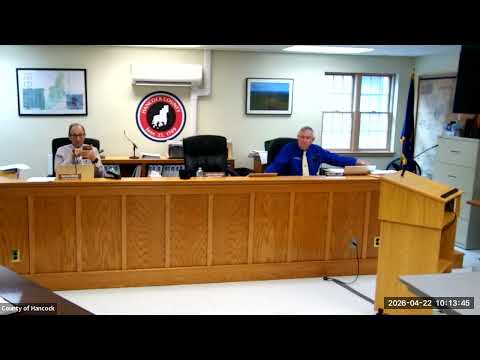
Hancock County abatement hearing for John A. Hair continued after appellant’s audio problems
Summary
A county panel continued John A. Hair’s property tax abatement hearing after the appellant could not resolve audio issues; Maine Revenue Services opposed a delay, saying Mr. Hair had not provided documentation. A new date will be set and parties notified.
The Hancock County hearing on John A. Hair’s property tax abatement was continued after the appellant failed to restore audio during the scheduled proceeding. Chair moved to reschedule the matter and the panel voted to continue the hearing.
The continuation followed a period in which the panel gave Mr. Hair multiple minutes to fix his connection. "We've given you 10 minutes so far to fix your audio problem," the Chair told the appellant before offering an additional five minutes. When technical problems persisted, panel members debated whether to treat the absence as a failure to appear or to set a new hearing date.
Stephen Sullivan, deputy director of the Maine Revenue Services Property Tax Division, told the panel the state objected to continuing the case. "We would object to continuing the case. We have made the effort to be here. Mr. Hair has not provided any documentation to support his claim," Sullivan said, arguing the state had shown up and that the appellant had not submitted supporting evidence.
Panel members noted the proceeding is a de novo hearing, meaning it would be heard anew, and expressed concern that denying the abatement without an adequate hearing could prompt an appeal. After discussion the Chair moved to continue the matter "due to technical difficulties on Mr. Hair's behalf," a motion that was seconded and adopted by voice vote. The panel said parties will be notified of the new, final hearing date; staff indicated May 19 (a commissioners' meeting day) was a possible option but that exact scheduling would be coordinated with Mr. Hair and commissioners.
The continuation leaves the abatement unresolved; the panel did not rule on the merits of Mr. Hair’s request. The state maintains it believes there is insufficient evidence on the appellant’s side, and the panel set a final rescheduled date to give Mr. Hair another opportunity to present his case.