Get Full Government Meeting Transcripts, Videos, & Alerts Forever!
Get email alerts on the Firearm Seizure topic
No spam. Unsubscribe anytime.
Firearm seizure working group flags compliance obstacles, suggests adding defendant signature to notice form
Summary
The firearms seizure and compliance working group identified four obstacles to ideal compliance—registration gaps, incomplete surrender verification, unsigned compliance forms, and resource limits for follow‑up—and proposed modifying the JDCL‑98 notice to include a defendant signature line acknowledging weapon prohibitions.
Members of the council's firearms seizure and compliance working group updated the full council April 22 on efforts to improve verification that defendants subject to protective orders have surrendered firearms.
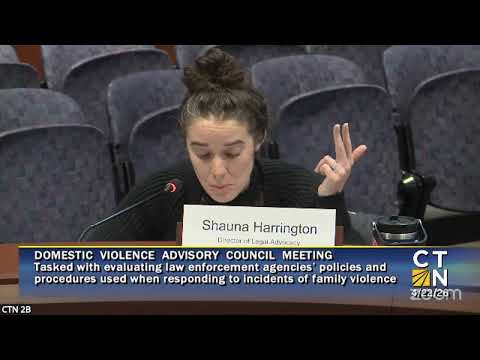
Shauna Harrington, Director of Legal Advocacy at CCADV and co‑chair of the firearms group, said the working group identified four primary obstacles: lack of mandatory firearm registration, the difficulty of matching a surrendered firearm to a registered record (the "match game"), defendants not signing the DPS‑332C compliance statement, and the Special Licensing and Firearms Unit (SLFU) not having resources to follow up when cases remain open.
To address the signed‑statement issue, the group proposed modifying the General Notification of Criminal Protective Orders (JDCL‑98) form to include a carbon copy and a signature line for the defendant acknowledging they have read that they may be prohibited from possessing firearms, ammunition, or electronic defense weapons. The working group invited input from bail and other partners and planned further discussion at its May 20 meeting.
Harrington said the change would not itself verify surrender of weapons but could create a clearer record that defendants were notified of prohibitions and that a defendant acknowledged them. Next steps include refining the JDCL‑98 modification and exploring whether bail or court staff can assist with verification workflows.
The working group did not present a formal council vote on the proposals during the meeting; it will continue development and report back.