Get Full Government Meeting Transcripts, Videos, & Alerts Forever!
Get email alerts on the Virtual School topic
No spam. Unsubscribe anytime.
Montgomery Public Schools proposes K–12 virtual school; vendor contract would cost about $1.225 million for 250 students
Summary
District staff recommended expanding the existing virtual program into a K–12 virtual school using vendor K12. The presented package for a 250‑student cohort was quoted at about $1,225,000; staff said the district must reach a 250‑student threshold by the October 40‑day FTE count to be certified as a school.
Montgomery Public Schools staff outlined plans on April 14 to expand the district’s virtual program into a full K–12 virtual school and recommended contracting with a vendor identified as K12.
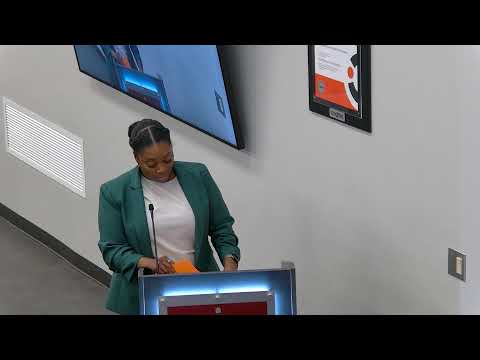
Sydney Snead, the district’s education technology coordinator, told the board the district currently operates a virtual program and must enroll 250 students (FTE at the October 40‑day count) to convert that program into a certified virtual school. Snead presented a comprehensive vendor package for a 250‑student cohort with an estimated program cost of $1,225,000, saying the figure covers teachers, curriculum, instructional materials and vendor services; Montgomery Public Schools would provide student devices.
Snead said K12 offers synchronous instruction options, PowerSchool integration and AP course support and that the company performs marketing to refer interested families back to the district. She also described the district’s approach to special education and related services: the vendor will create IEPs and deliver some services virtually while the district will provide a local special‑education facilitator and in‑person service visits within a planned service radius for students who require homebound‑style delivery.
Board members asked about enrollment deadlines, how Chromebooks would be issued and tracked, whether vendor teachers would be remote or local, and the mechanics of MTSS and IEP delivery in a virtual setting. Snead said the district plans to hire facilitators (including retired teachers in facilitator roles) and will require synchronous participation for attendance reporting where appropriate; absentee counts will be enforced when students do not join scheduled synchronous sessions.
Snead recommended the board approve policy and contract changes that would expand the district’s virtual program to a K–12 model and permit staff to proceed with vendor contracting, recruitment and a prompt application launch to recruit students ahead of the October FTE calculation.