Get Full Government Meeting Transcripts, Videos, & Alerts Forever!
Get email alerts on the Curriculum Adoption topic
No spam. Unsubscribe anytime.
Montgomery Public Schools board reviews multimillion-dollar textbook and curriculum adoptions
Summary
School staff presented multiple instructional-material proposals including a $4,556,574.31 K–12 social studies adoption, ELA intervention materials, fine-arts resources and new K–5 and Tier 2/3 math programs. Board members asked about funding sources and local political pressure over the $4.5 million request.
The Montgomery Public Schools board on April 14 reviewed several large instructional-material proposals that together would represent a major investment in curriculum and classroom resources across grade levels.
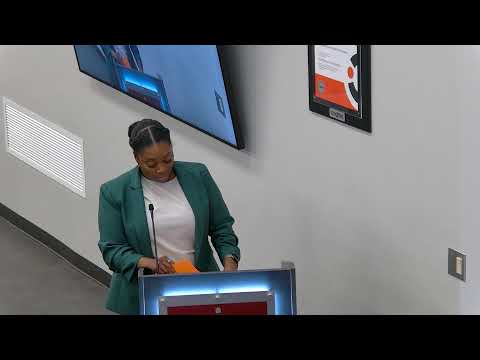
Dr. Doudy, the district’s elementary ELA and social studies specialist, asked the board to approve additional K–5 ELA anthologies and handwriting workbooks (a request she said totals about $405,022) and supplemental SPIRE intervention kits (about $69,323.98). She told the board those materials are needed to ensure "consistent and equitable access to ELA instructional materials" and to comply with state intervention requirements.
The meeting’s largest single item was a six-year K–12 social studies adoption. After a five-month review process, the committee recommended Gallopade for K–5 (teacher print/digital bundles and professional development, $1,652,840.91) and a balanced portfolio for grades 6–12 (multiple vendors to cover courses including AP, $2,903,733.40), for a combined social-studies total of $4,556,574.31.
Natalie McKnight presented a separate K–12 fine arts adoption to align district instruction across seven fine-arts disciplines; that six-year package was quoted at roughly $1,200,666.67 and would include ongoing professional learning.
K–5 math materials were also on the agenda. Katura Maze recommended "Ready Math" as a Tier 1 curriculum (quote: $450,732.25) and "Do the Math" for Tier 2 and Tier 3 intervention (materials and associated services; quoted figures cited in the presentation included $540,148.44 for materials and $293,687 for professional development; the presenter summarized the combined total as $833,835.44).
Board members asked detailed implementation questions about grade-level coverage, consumable workbooks, and how resources would travel with students who transfer between schools. During discussion a board member raised concerns that a county-level funding dispute could jeopardize the social-studies allocation, saying the $4.5 million proposed "is the same $4.5 million that our county commission is trying to take from us." That assertion was challenged and pushed back in floor debate; the board did not act on the adoptions at the meeting.
Dr. Doudy emphasized the committee process used to vet vendors and the adoption’s alignment with state standards and literacy goals. Board members pressed staff to supply additional breakdowns (by school, grade and funding source) before final approval.
The district will bring detailed contracts and funding clarifications back to a future board meeting for formal action.