Get Full Government Meeting Transcripts, Videos, & Alerts Forever!
Get email alerts on the Career Exploration topic
No spam. Unsubscribe anytime.
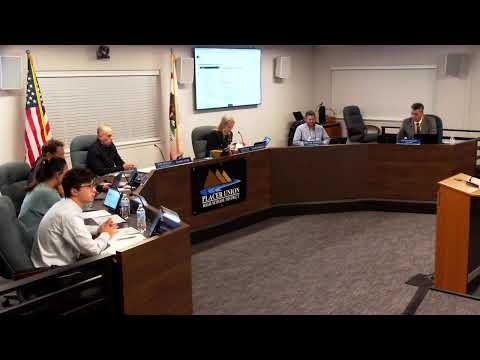
Army recruiter pitches ASVAB-based sophomore career-exploration program to Placer Union trustees
Summary
A U.S. Army recruiter asked trustees to authorize districtwide administration of the ASVAB and career-exploration portal to sophomores, framing the test as a low-cost career-planning tool; trustees requested counseling protocols, equity safeguards for IEP/EL students, and site-level coordination.
Sergeant First Class Daniel Cabrera of the Northern California Recruiting Battalion presented a plan to offer the ASVAB and associated career-exploration portal to all district sophomores as a one-day, minimum-day test and optional interpretation sessions for students and counselors. Cabrera said last year 64 Placer students took the ASVAB out of approximately 3,800 enrolled — “less than 2%” — and argued a sophomore rollout would maximize the two‑year validity of scores while serving as a career-planning resource rather than a recruitment drive.
Cabrera walked trustees through the online portal that translates ASVAB results into interest codes, occupational descriptions, education pathways and college matches. He said counselors receive each student’s score sheet and that the district’s planned model would place testing on a minimum day to avoid a full day of lost instruction. He noted no district funding would be required beyond Chromebooks and internet access: “This is zero cost for the district,” Cabrera said, adding that junior and senior students could test later if they wish.
Board members asked detailed logistical and equity questions. Trustees sought confirmation that each site would have a trained test coordinator and that students with IEPs or 504 plans would be able to opt out or receive accommodations; Cabrera said the ASVAB itself is English‑language only and that the district should treat testing for students with significant language needs as voluntary. Trustees also pressed on counselor time and how score data would be protected and used; Cabrera said score sheets go to counselors and that parental-release windows exist (discussion noted a delay window from 7 to 120 days on data release in some cases).
Trustees from Title I sites asked whether the tool would advantage students who already have more exposure to career and CTE pathways. Cabrera and district staff suggested the portal can inform CTE planning and help site teams better align electives to student interest codes. Several trustees called the tool a useful option for students who will not follow a four‑year college path, with one noting a recent Placer graduate found work and training opportunities after military service.
No formal action was taken Thursday; trustees directed staff to coordinate with counselors and site administrators, confirm accommodations procedures for IEP/504 and EL students, and return with an implementation plan and recommended opt‑out/notification language. A number of trustees urged a clear, counselor‑led roll‑out and information for parents before any universal scheduling.
What’s next: staff will prepare a detailed implementation plan and sample parent notification/opt‑out language for board review before a districtwide launch.