Get Full Government Meeting Transcripts, Videos, & Alerts Forever!
Get email alerts on the Elections Forum topic
No spam. Unsubscribe anytime.
Candidates at Amador forum press for fire-insurance fixes, budget transparency and scrutiny of proposed Buena Vista data center
Summary
At an Amador High School forum hosted by local civic groups, local and state candidates debated wildfire insurance, fiscal transparency, rural services and a proposed data center near Buena Vista. Speakers urged more state and federal funding for mitigation and called for careful review of resource impacts.
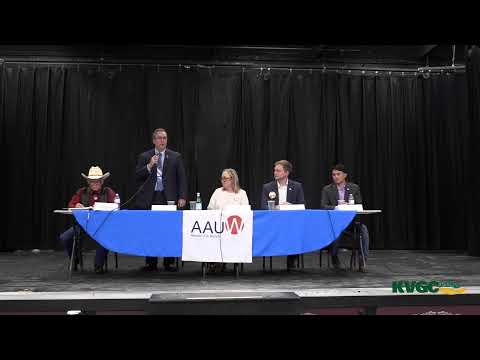
A candidate forum at Amador High School drew local voters and students for a two-hour discussion on wildfire insurance, fiscal transparency, rural services and a proposed data center outside Ione.
The event, run under League of Women Voters guidelines and moderated by Katie Scott and Rebecca Wilson, opened with brief candidate introductions and student‑prepared questions. Sandy Waldo, who identified herself as an Amador County resident and longtime local official, framed her campaign around local service and practical fiscal experience. "I am here to challenge the status quo respectfully but firmly because our community deserves better," Waldo said during her opening remarks.
Several candidates singled out wildfire insurance as the county's most urgent policy problem. One candidate running for state office said wildfire insurance reform would be her "number one priority" and urged a mix of defensible‑space investments, home hardening and larger public‑model solutions akin to reforms used in other states. Speakers repeatedly pointed to the need for more state and federal funding for fuel reduction and mitigation, and noted the Community Wildfire Defense Grants program as a key source of support that is slated to expire unless renewed.
On fiscal transparency, Michael Tubbs emphasized accessibility and candor. "If I don't know something I will let you know," Tubbs said, describing town halls and regular communication as the foundation of accountability. County candidates and supervisors described a mix of audits, posted meeting materials, and public listening sessions; several referenced a county budget shortfall discussed in the forum and said they had pursued audits and discretionary‑fund disclosures to improve public information.
Rural services—transportation, water and access for linguistically isolated residents—also drew sustained attention. Candidates endorsed practices ranging from bilingual staffing and dial‑a‑ride services to more aggressive pursuit of grant funding. Multiple speakers warned that unfunded state mandates make local implementation difficult unless the state funds the work.
The proposed data center project near Buena Vista prompted sharp questions from the audience and candidates. Panelists raised concerns about water and energy demands, the realism of job promises, and the need for robust environmental review before any use permit is accepted. One forum speaker noted the site would pair a permitted biomass cogeneration plant with a proposed data center and encouraged residents to review planning documents and the developer's materials.
The forum closed with brief one‑minute statements in which candidates reiterated their priorities—roads, wildfire resilience, fiscal restraint and local engagement—and invited voters to ask questions afterward. Organizers said candidates would remain available to meet members of the audience after the program.
The forum did not include formal votes or endorsements; it functioned as a public Q&A to help voters compare positions ahead of the election.