Get Full Government Meeting Transcripts, Videos, & Alerts Forever!
Get email alerts on the Public Safety topic
No spam. Unsubscribe anytime.
Public-safety communications budget emphasizes staffing, system upgrades as dispatch vacancies persist
Summary
New Haven’s public safety communications director presented a mostly flat departmental budget with a small operating increase and stressed capital work on systems and site hardening; he reported 14 dispatch vacancies and that 94% of 911 calls are answered within the ideal time frame.
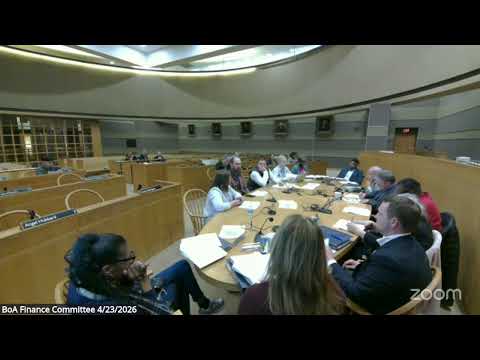
Joe Vitali, director of public safety communications, told the finance committee the department’s operating budget is essentially flat year over year with a modest $10,700 net increase and that significant salary adjustments remain in a contract reserve until bargaining settles. He said the PAP handles a high volume of contacts and is managing a mix of 911 and administrative work.
Vitali highlighted capital and technology work that he said will improve reliability, including an upgraded generator and a lightning-protection system at East Rock and the nearly completed Pro Phoenix CAD rollout, a multiagency project he said will bring 911, PD and prisoner intake systems under one platform. "We handle 470,000 phone calls last year," Vitali said, adding that 160,000 of those were 911 calls.
The presentation included workforce detail: "Right now the number of vacancies is 14," Vitali said, referring to dispatcher positions. He described a cross‑training approach that brings new hires in as call-takers for months before assigning radio dispatch responsibilities and said recent hiring pipelines produced five strong candidates. He also noted quality-assurance work spanning nearly 6,000 call reviews last year as part of performance monitoring.
Alder Fesa and others asked about response times and nonemergency lines. Vitali clarified the 94% figure: "Within 10 seconds is 94% of the 911 calls are answered," he said; he added that administrative lines experience longer queues because callers sometimes call 911 with nonemergency questions that are then routed to administrative queues. Committee members pressed staff for quarterly reports showing state reimbursement usage; Vitali said those quarterly reports were recently completed and can be provided.
Committee members also discussed recruitment constraints and training schedules. Vitali described staffing as an ongoing challenge driven by hiring pipelines, retention and the need to coordinate formal training cohorts. He said some software tools (including AI-enabled call‑volume management tools the department already owns) are being considered to better process administrative calls without reducing staffing.
The committee did not take a vote; members asked the department to provide requested grant- and reimbursement-detail figures before final budget adoption.