Get Full Government Meeting Transcripts, Videos, & Alerts Forever!
Get email alerts on the K 12 Education topic
No spam. Unsubscribe anytime.
Sandy Elementary highlights coaching, SEL and robotics as student proficiency rises
Summary
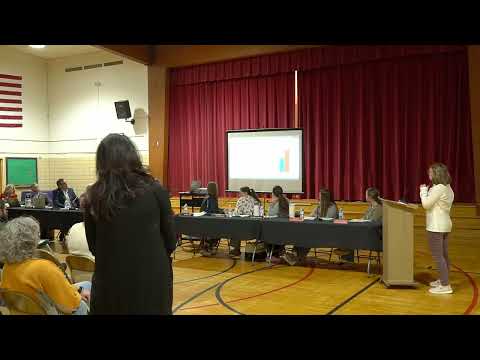
Sandy Elementary staff told the Marquette Area Public Schools board that instructional coaching and targeted interventions have driven measurable gains — with coaching-cycle proficiency climbing from about 44% to 69% post-intervention and one first-grade class reporting near-80% proficiency after a Math Camp.
Stacy Brock, principal of Sandy Elementary School, told the Marquette Area Public Schools board that a renewed focus on inclusive instruction and tiered supports has produced measurable student growth.
"I'm just super proud of my staff," Brock said, describing the building as a "positive teamwork climate" where staff collaborate to integrate students from early childhood special education through functional skills programs across grade levels.
The presentation outlined several instructional strategies that school leaders say have contributed to gains. Amy Pruner, the building instructional coach, said the school has completed multiple coaching cycles this year that include pre- and post-assessments. "Most of the students were like 44% proficient and then with the post-test assessments on average we were at 69%," Pruner said, summarizing aggregated coaching results.
Teachers described classroom-level interventions that translate coaching into practice. First-grade teachers Sarah Max and Krist said a short-term "Math Camp" led by the instructional coach allowed teachers to pre-assess students and tailor instruction; both teachers reported dramatic growth in participating classes to nearly 80% proficiency by follow-up screening.
Beyond academics, Brock described social-emotional learning structures, monthly student-support meetings, and tier-2 small intervention groups led by the school counselor to address anxiety, friendships and self-regulation. The school also uses the FastBridge screener system to inform interventions across grade levels.
Staff highlighted extracurricular programs that support engagement: a Lego robotics club that qualified for state competition (improving a final run score to 215 and moving the team from 52nd to 40th place), an after-school keyboard program funded by a parent-group grant, and a number of arts and fitness clubs. Music teacher Bill Brazier described a grant that bought 14 keyboards for classroom use with plans to expand to a full class set.
Brock also noted community partnerships with Northern Michigan University: more than 60 university students make classroom observations and a subset are hired as paid tutors (up to 20 hours) who support instruction. She said the school has materials ready for a planned reading forest and greenhouse; a local contractor has offered to donate labor to complete that project.
The presentation closed with a look ahead to 2026-27 priorities (monthly SEL themes, staff learning walks and alignment of priority standards) and with practical reminders about kindergarten registration and end-of-year scheduling.
The school's presentation framed the gains as outcomes of coordinated coaching, targeted interventions and community supports. Board members praised the staff and encouraged community members to attend school events and note the programs when considering district priorities.