Get Full Government Meeting Transcripts, Videos, & Alerts Forever!
Get email alerts on the Cpa Funding topic
No spam. Unsubscribe anytime.
Springfield committee reviews 30 CPA project applications, sets May 5 vote after discussion
Summary
The Springfield City Community Preservation Committee held a discussion-only meeting April 21 to review 30 project applications, from historic‑building repairs to park upgrades. Members flagged eligibility questions, debated scale of awards and agreed there will be no votes until the May 5 meeting.
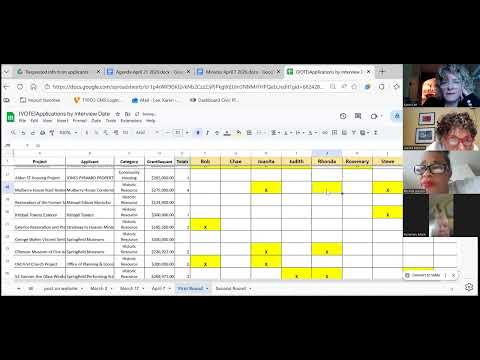
The Springfield City Community Preservation Committee met April 21 to review 30 Community Preservation Act (CPA) project applications and to hear members explain their top-eight priorities; the panel discussed priorities but did not take votes.
Karen Lee, the committee administrator, opened the meeting and reminded members that "our next meeting is May 5th and that will be voting on recommendations." Chair Bob McCarol told members the session was "simply a discussion of every single project" and that no votes would be taken tonight.
Why it matters: The committee expects roughly $3 million to recommend for the coming cycle and must decide both which projects to recommend and how much to allocate. Members said modest CPA awards can leverage state grants and private investment for large housing projects, while smaller cultural and preservation requests may need full funding to complete urgent repairs.
What members prioritized - Gunblock restoration: Several members argued the vacant, historic Gunblock building is a high‑visibility eyesore downtown and urged funding to restore storefronts and stabilize the structure. "It's been empty for way too many years," one member said, and speakers cited the building's long vacancy and potential to reactivate street‑level commerce.
- Housing initiatives: The Down Payment Assistance program drew multiple endorsements as a cost‑effective way to promote owner‑occupied housing. Members also discussed larger projects — Rainville/New Court Terrace and Bella Apartments — noting the committee's contribution would be a small fraction of overall costs but could signal local commitment and help secure outside grants.
- Historic homes program: Committee members expressed strong support for the committee's own Historic Homes program, which provides small repairs to owner‑occupied older houses. One member said Springfield is "the only CPA across Massachusetts that offers this type of program" and argued it protects neighborhood character while helping owners with limited means.
Questions and cautions - Eligibility and scope: Members debated whether smaller 'micro‑park' concepts in the ReGreen/Urban Wilds study fit the CPA definitions of "open space" and "recreation." The chair urged members to read the state law definitions before voting. "When you read the definition of recreational land, I'm having trouble fitting a little postage‑stamp parcel into that definition," a member said.
- Private/commercial applicants: The Bridge Street elevator project and some commercial building requests prompted questions about applicant capacity to pay or finance repairs (rent income, condo assessments). Several members asked whether for‑profit portions of projects should be prioritized for other funding sources.
- Design and cost scrutiny: Members raised design concerns and cost questions for the Alden Street affordable house application after the applicant revised plans; one member said the $325,000 ask made them withdraw support.
Process and next steps No formal motions or votes were taken on April 21. Karen Lee said members may change their top‑eight lists before the May meetings; the committee will consider both which projects to recommend and whether to scale awards below applicants' requests. The chair said the comptroller will provide a refined revenue estimate ahead of the May 5 session.
Members said they expect to vote on a tranche of projects at the May 5 meeting; remaining items would be considered at a subsequent May meeting. The committee will post the revised spreadsheet and materials to the shared Google Drive for members and the public.
What the committee did not do The committee did not make any final funding recommendations, nor did it adopt motions or vote on project awards. Members repeatedly emphasized tonight's purpose was to hear applicants, identify priorities and flag eligibility issues ahead of formal votes.
The next meeting is scheduled for May 5, 2026, when the committee plans to vote on funding recommendations.