Get Full Government Meeting Transcripts, Videos, & Alerts Forever!
Get email alerts on the Land Use topic
No spam. Unsubscribe anytime.
Neighbors oppose short-term rental at Boat House Cove; board approves special exemption with conditions
Summary
Neighbors at Boat House Cove urged the Lancaster County Board of Supervisors to deny a special‑exception application, citing covenants, noise and year‑round neighborhood character. Despite opposition, the board approved the special exception for Samuel and Nicole Longo’s property but said complaints will be enforced and the county will re-evaluate the permit if violations occur.
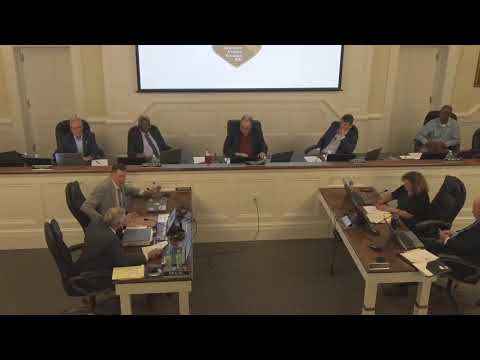
Neighbors in the Boat House Cove neighborhood told the Lancaster County Board of Supervisors on April 23 they oppose a special‑exception request to operate an unhosted short‑term rental at 129 Boat House Cove.
Multiple neighbors spoke during the public hearing. Richard Allen said the cove is a year‑round, tight‑knit residential community and urged the board to ‘‘ask yourself every day, are we doing what’s best for the citizens of this county?’’ He and others said lots are narrow and closely spaced and that the neighborhood is not an appropriate place for an Airbnb-style operation.
Jerry Stary said many residents did not receive mailed notices promptly, and he said neighborhood covenants explicitly bar commercial uses. Margaret Brown, who has lived in the neighborhood since 1978, said she opposed the continuous flow of strangers and said the neighborhood looks out for each other; Scott Mays, across the street from the property, told the board he sees the same truck and trailer at the site nearly every month and questioned whether the site is being used as an ongoing business or as short‑term lodging.
Planning staff confirmed the short‑term rental application had the health‑department clearances (two‑ or three‑bedroom capacity depending on the property) required by county procedures, parking plans, liability insurance and a certificate of occupancy. Staff also said the short‑term‑rental registration is active for the 2026 calendar year and the transient‑occupancy tax is collected. Neighbors cited deed covenants, but county legal staff explained the county cannot enforce private covenants; enforcement of covenants is a private civil matter between property owners.
Applicants Samuel and Nicole Longo appeared by Zoom. Sam Longo said the property’s average stays are under seven days and that they have hosted traveling nurses and contractors working on the school project. Nicole Longo said the owners had litigated earlier covenant disputes in circuit court and that judges had found their operation complied with those covenants.
Board action: After discussion, a supervisor moved to approve the special exception under the condition that the owners continue to comply with the listed short‑term‑rental regulations and that county staff will review the permit if complaints are filed; the motion carried.
Why it matters: The case highlights tension between neighbors seeking to preserve year‑round residential character and property owners asserting rights to rent. It also illustrates the limits of county authority over private covenants and the county’s enforcement pathway — code compliance and the special‑exception rules — when neighbors raise repeated complaints.
What to watch next: The county said it will enforce short‑term‑rental regulations and re‑review the permit if documented complaints arise. Neighbors who believe covenants were violated retain the option of private enforcement through civil court.