Get Full Government Meeting Transcripts, Videos, & Alerts Forever!
Get email alerts on the Genetic Data Privacy topic
No spam. Unsubscribe anytime.
Committee weighs 60-day "cure" period in H.639 genetic data privacy bill
Summary
The Economic Development, Housing & General Affairs committee reviewed draft amendment 2.1 to H.639, debating whether to require a notice-and-cure period (60 days vs. shorter, limited options) before a private right of action; members agreed to consider a 60-day compromise and revisit next week ahead of a May 8 deadline.
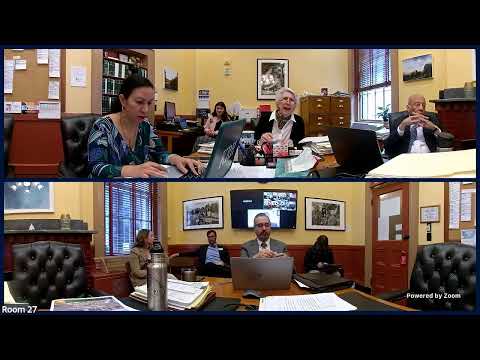
Chair opened the committee and said members would turn to consumer-protection bills, including a genetic data privacy measure and new language from legislative counsel.
Rick Sel of the Office of Legislative Council presented draft 2.1 to H.639, describing two amendment instances: the first (removing biometric data) stayed the same and the second added an enforcement provision tied to the consumer protection act. "There would be a 60-day cure period," Sel said, explaining the option would require a consumer to notify a business of an alleged violation (for example, selling genetic data or storing it outside the U.S.) and allow the business 60 days to remedy the problem before the consumer could file suit.
Committee members contrasted that broad 60-day option with a narrower 15-day cure the panel had discussed earlier, which would be limited to specific violations such as missing a privacy policy. Thomas asked whether cure periods are common; Sel replied that Vermont does not typically have statutory cure periods and that state practice varies.
"Vermont doesn't have any cure periods," Todd D, Assistant Attorney General, said, adding that the attorney general's office often engages informally with complaint targets and that some other states are adopting notice-and-cure approaches. Sel and others framed the amendment as a policy choice that balances giving consumers a remedy with giving industry an opportunity to fix errors before litigation.
Bridget Morris of Smart Strategies, speaking on behalf of Ancestry.com, said her client's preference was not to add a cure period but that, "in the spirit of compromise, yes, this would be — we want to ensure that it stays at 60 days and then it covers the whole [subchapter]." Committee members responded that a 60-day cure was the option some were most comfortable with and that they would consider it further.
The chair cautioned the group about timing: the committee has a May 8 deadline to report bills out. She said members would think about the amendment over the weekend, staff would consult with David Weekes, and the committee would revisit H.639 next week. The committee took a 15-minute break and planned to resume at 10:30 with a landlord-tenant discussion.