Get Full Government Meeting Transcripts, Videos, & Alerts Forever!
Get email alerts on the Governance topic
No spam. Unsubscribe anytime.
Trustees debate limits on virtual attendance; medical-only restriction fails
Summary
The board debated tightening the village's remote-attendance rules for trustees and appointed officials. A motion to restrict virtual attendance to medical reasons and require notification failed 4–3; a later camera-on/primary-responsibility amendment also failed. Trustees asked staff to refine the policy language and clarify notice and closed-session rules.
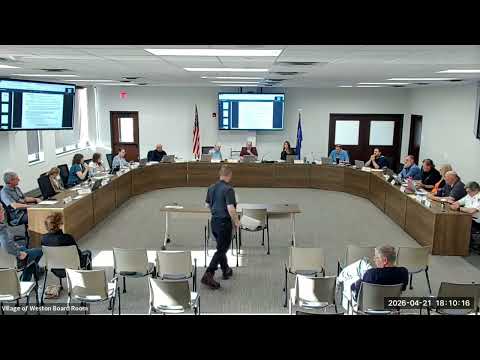
Trustees spent more than an hour debating the elected-and-appointed-officials handbook section governing remote participation. Discussion focused on whether the board should restrict virtual attendance to narrow circumstances, require cameras on for remote participants, and ban remote participation for closed sessions.
Trustee Luis argued that elected officials should primarily attend in person and that virtual attendance should be reserved for medical reasons. "I think it’s time to eliminate the risk of that," he said, describing past instances when remote participation was abused. A motion reflecting that position—restricting virtual attendance to documented medical reasons, requiring notice to the clerk/administrator/chair and prohibiting remote participation for closed session—was moved and seconded but failed on a 4–3 vote.
A subsequent motion that would have kept medical exceptions while explicitly requiring remote participants to keep their camera on and stressing that in-person attendance is the default also failed on a roll-call vote. Trustees who opposed the restrictions said technology now allows meaningful remote participation for occasional needs and that policy should be clear but not punitive.
After the votes the board directed staff to revise the policy language to clarify notice requirements (the handbook currently calls for 12-hour notice for remote participation), explicitly require camera use where feasible, and state that closed sessions require in-person attendance. Any formal edits will return to the board for final approval.
Next steps: staff was asked to draft a revised remote-attendance policy that clarifies notice, camera expectations, and that closed sessions require physical attendance; the draft will be brought back to the board for consideration and possible adoption.