Get Full Government Meeting Transcripts, Videos, & Alerts Forever!
Get email alerts on the Environmental Planning topic
No spam. Unsubscribe anytime.
Public urges explicit wetlands protections as Marion County advances zoning plan
Summary
During the public hearing on the county's 10-year comprehensive plan update, residents urged Marion County to include explicit wetlands and floodplain protections and to consider new industrial and energy projects in zoning rules; councilors said zoning and the plan will work together and held some items for additional review.
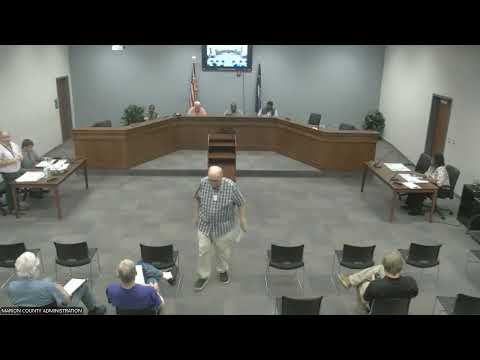
A resident told Marion County Council during a public hearing that the county's 10-year Comprehensive Plan update should explicitly protect wetlands and floodplains, saying local protections are more important now after recent federal changes narrowed jurisdictional wetland protections.
"Flood plains, wetlands are very important for flood mitigation. There are natural storm water infrastructure that we don't have to build and pay for," the resident said, urging the county to maintain and plan for those natural systems rather than rely solely on built solutions.
The resident cited Georgetown County as an example that incorporated wetlands considerations into its comprehensive plan and urged Marion County to do the same as it prepares for future growth.
Another public commenter, speaking in favor of reinstating county zoning, warned that the county faces pressure from large projects — including battery plants, solar farms, data centers and wind — and said resource constraints (water, electricity and infrastructure) increase the importance of local planning. That commenter stated that the region had recently experienced a costly, stalled battery project and expressed skepticism about large out-of-area investors.
Council members and staff described the comprehensive-plan process as an approximately 11-month effort involving the county planning commission and the regional Council of Governments, and said the plan and zoning ordinance are intended to work together so that large-scale land-use changes come before the planning commission and then the council, rather than being subject to unilateral private development.
The Chair and council agreed to hold some items and return them for final action at a future meeting after staff provides updated ordinance text and legal memos. The renewable-energy ordinance was specifically tabled for additional review, and the comprehensive plan will be disclosed again at the next meeting before final adoption.
The public comments recorded in the hearing included an unverified assertion about a prior battery-plant project and its costs; that claim was made by a resident during public comment and was not substantiated in the council record.
The council is expected to receive updated ordinance language and memos to guide further consideration of zoning, renewable-energy siting and any explicit wetlands protections.