Get Full Government Meeting Transcripts, Videos, & Alerts Forever!
Get email alerts on the Governance topic
No spam. Unsubscribe anytime.
Sumner County Board defers revision to public-comment policy after heated debate over 7-day notice and executive-committee approval
Summary
After a lengthy discussion about a draft revision to policy 1.404 meant to comply with recent state law on non-agenda public comments, the Sumner County School Board voted to defer final action to a May study session amid objections to a proposed 7-day notice and an approval step involving the director of schools and board chair.
The Sumner County School Board on Tuesday debated a draft revision to policy 1.404 (appeals and appearances before the board) intended to comply with a recent state law requiring local governing bodies to provide a public-comment period for non-agenda items.
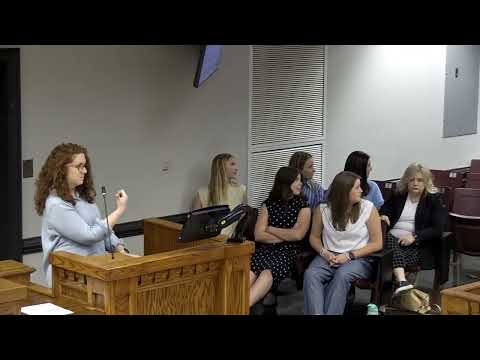
A citizen, Ruth Fennel, told the board she had previously experienced what she called a retaliatory policy change in 2016 that removed a prior avenue for non-agenda comments. "Please do not obstruct the Tennessee Constitution," Fennel told the board, urging restoration of broader access to speak on matters not listed on the agenda.
Board discussion focused on two contentious elements in the draft: a requirement that citizens submit advance notice (draft language suggested a seven-day request window before voting sessions) and a provision that an "executive committee" (the director of schools and the board chair) approve requests. Supporters of the advance-notice language argued it would let staff identify recurring issues and add matters to the agenda when appropriate; opponents said it creates a gatekeeping layer that could restrict speech.
"The intent of the law was to expand speech, not restrict it," one board member said during debate, arguing that requiring permission from an unelected official worries constituents. Others urged practical notice to allow staff to prepare background information or to move heavily requested topics onto the formal agenda.
Board members proposed and debated amendments (including striking the executive-committee approval clause and clarifying the meeting end time when public comment is reserved). With strong differences remaining, the board voted to defer final action to its May study session so members could reconcile legal requirements, TSBA guidance and local practice. The board's attorney and TSBA materials were cited during debate as sources for optional language.
The meeting record shows the state law on public-comment periods was cited as already in effect; staff told members the law took effect March 26, 2026, and the board must provide a period for non-agenda matters but may define reasonable procedures for handling requests.
Outcome: the board deferred the policy to the May study session for further review; the transcript records the motion and its passage but does not include a roll-call vote tally for the deferral.