Get Full Government Meeting Transcripts, Videos, & Alerts Forever!
Get email alerts on the Bond Reconciliation topic
No spam. Unsubscribe anytime.
BET committee approves cleanup of old bond authorizations, allows staff to finalize allocations
Summary
The Town of Greenwich BET budget committee voted to deauthorize $6.6 million in excess bond authorizations from past capital projects and authorized staff to reallocate roughly $9 million in excess proceeds (subject to final adjustments) to reduce future borrowing for Central Middle School, while members debated whether sewer-related proceeds should be kept within sewer fund accounts.
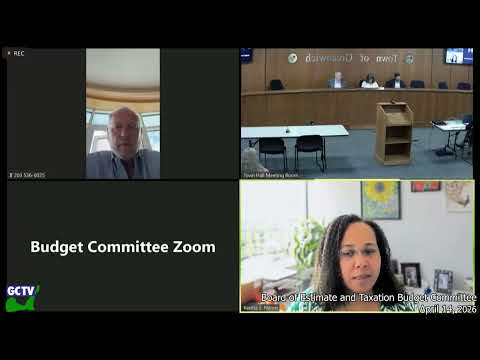
The BET Budget Committee on a voice vote approved a finance department resolution to reconcile past capital project appropriations and deauthorize excess bond authorizations, with a caveat allowing staff to finalize the date and allocations before the committee’s next meeting.
The motion, moved by Mr. Fischer and seconded by Mr. Fenton, endorses a multi‑year reconciliation that reviewed appropriations, authorizations and expenditures for capital projects covering the period cited in the exhibit (the staff summary traced the first 11 years through fiscal 2018). "This resolution is intended to sort of take all of that information and bring us to a close out of the projects," said Kesha Palmer, Robinson and Cole bond counsel, explaining that deauthorizing unused bond authorizations and reallocating any leftover proceeds must comply with IRS rules about reallocation, debt service or redemption.
Palmer told the committee the reconciliation found many very small residual authorizations and a more limited set of material excesses; the finance office’s current working totals cited during the discussion were roughly $6.6 million in deauthorized authorizations and about $9 million of excess proceeds that could be used to offset borrowing for Central Middle School. "One option is transferring it to an open project — Central Middle School — and have the proceeds used to offset the borrowing that you still need to do to complete that project," Palmer said.
Several members raised procedural and policy questions. Mr. Fischer pressed whether netting line‑item over- and under-allocations across a broader bond authorization stays within the BET’s charter authority; Palmer said the firm’s charter review concluded the BET was the appropriate body to act. Miss Tarkington objected on policy grounds to using funds tied to sewer improvement projects for a general‑fund school project, saying taxpayers in the sewer district had already been assessed for specific work: "When we close them out, should we be separating the sewer improvement projects from the town’s general fund projects rather than appropriating that money to Central Middle School?" she asked.
Palmer replied that her legal view treats authorized bonds as a general obligation pot for the purposes of closure, but that how the town reallocates proceeds is a policy choice for the committee and the town. Committee members noted the sewer breakout on the reconciliation shows about $1,395,144.16 tied to sewer improvements and discussed alternatives: transfer the proceeds to a sewer project with an outstanding authorization, apply them to sewer debt service, or retain them for redemption.
To address the unresolved policy questions and a clerical date discrepancy in the fourth whereas clause, Mr. Fischer amended the motion to approve the reconciliation "subject to change in the date and change in the allocation of unspent bond proceeds by the finance department prior to our meeting on Tuesday." The amended motion carried. The committee also asked staff to consult with DPW and sewer officials and to report back if material issues arise before the Tuesday meeting.
Next steps: finance will finalize the date and allocations, clarify the sewer‑fund breakout and present the revised resolution at the committee’s next meeting. The vote as recorded in the meeting record was in favor of the amended motion; no roll‑call tally of named votes was recorded in the transcript.