Get Full Government Meeting Transcripts, Videos, & Alerts Forever!
Get email alerts on the Employment Compensation topic
No spam. Unsubscribe anytime.
Appeals court revisits State Street’s freeze of deferred compensation and wage-act claim
Summary
Appellant argued State Street froze deferred compensation in bad faith during a DOJ-related probe and the delay amounted to a Wage Act violation; State Street said the contract allowed suspension pending investigation and that the plan was not a "wage." The panel pressed parties on contractual rights, timing and whether fact issues remain for a jury.
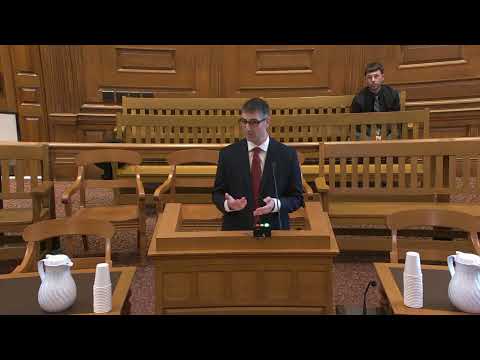
Appellant counsel Lee Racich told the panel that State Street froze Irene Spyridakos’s deferred compensation two days before a scheduled vesting date in May 2016 and that the company later returned the funds only after the government’s probe concluded—by which time years had passed. Racich argued the freeze was done without a good-faith basis and that the resulting delay and loss of use of funds support breach of the implied covenant and a Wage Act claim: "The delay is the issue," he said, noting the cash and stock amounted to roughly $500,000 eventually paid after vesting was restored.
State Street’s counsel Morgan Nyan said the contract expressly permitted suspension pending an investigation and that the company had evidence (interviews, emails) supporting its decision to freeze particular awards; she also invoked a Supreme Judicial Court precedent holding that many deferred-compensation arrangements fall outside the Wage Act where the award remains employer property until vesting. Nyan argued that the company acted in good faith and that the record did not show bad faith warranting reversal.
The court asked whether the plaintiff was singled out or whether multiple employees had awards frozen as part of a broader investigatory process and probed whether the later restoration of benefits to some employees undermines or confirms the company’s investigatory posture. Racich said only a subset of employees had funds frozen and that the selection and the process raised triable questions of fact. The panel submitted the matter for decision.