Get Full Government Meeting Transcripts, Videos, & Alerts Forever!
Get email alerts on the Search Warrant Nexus topic
No spam. Unsubscribe anytime.
Defense disputes nexus for home search in drug-trafficking appeal; court presses surveillance and ping evidence
Summary
In Commonwealth v. Olivares, defense counsel argued the affidavit supported searching a separate stash house but not the defendant’s 137 Heard Street residence absent stronger ties; the Commonwealth cited coordinated visual surveillance, ping data and seized fentanyl to justify probable cause. The court submitted the case.
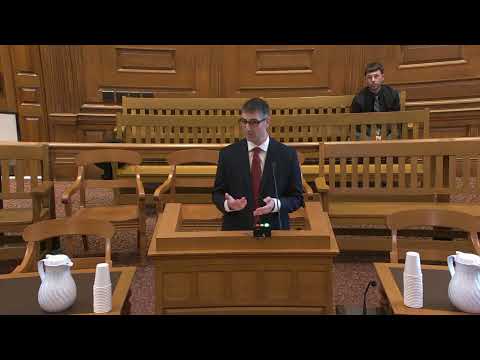
Defense counsel Stacy Silvera argued the affidavit supporting a warrant to search 137 Heard Street lacked facts tying the defendant to that residence for drug trafficking—pointing out that controlled buys and confidential-informant descriptions placed transactions at other locations and that the phone pings placed the device at 137 Heard only on two buy dates. "There is probable cause to search 137 Heard Street? I would say no," Silvera told the panel, urging caution about inferring the defendant’s ownership or control of the phone based on limited ping data.
The panel explored the scope of the affidavit and the low probable-cause standard. Commonwealth counsel Charlie Marshall replied that the magistrate could infer a nexus from repeated coordinated visual surveillance and ping data that moved in tandem with the defendant, surveillance that included overnight observations, parking at numbered spots, and delivery patterns connecting co-defendants and a stash house. Marshall noted recovered quantities of fentanyl (approximately 70 grams across the investigation) and testimony tying the phone’s movement to the defendant’s known locations.
The justices questioned whether the affidavit’s surveillance details and an observed pattern of phone movement were enough to support entry to search a residence for records, proceeds, and paraphernalia. Silvera also raised discovery concerns and the timing of police presence at the property she argued may have prejudiced the defense. After robust questioning by the panel, the case was submitted.