Get Full Government Meeting Transcripts, Videos, & Alerts Forever!
Get email alerts on the Economic Development topic
No spam. Unsubscribe anytime.
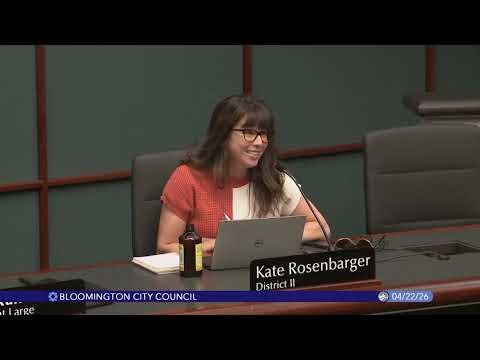
Council approves Summit District EDA and Shasta Meadows TIF to help fund major roads and infrastructure
Summary
The council approved a new Summit District Economic Development Area and a Shasta Meadows residential allocation area (residential TIF) to help finance construction of Sudbury/Adams/Vanguard roads, intersection upgrades and associated infrastructure; council and public debated costs, school impacts and whether public dollars should cover developer‑scale roads.
The Common Council voted to create the Summit District Economic Development Area and to designate Shasta Meadows as a residential allocation area (a residential tax‑increment financing area) on April 22. City staff and ReFinancial Group described the tool as a way to capture incremental tax dollars generated by future development and use them for area‑serving infrastructure that developers otherwise could not fully fund up front.
Officials said the Summit PUD includes major arterial connections that must be constructed before occupancy of residential units (Adams and Sudbury) and that those roads — plus promising civic elements such as a donated parcel for a fire station — require significant up‑front investment. The Shasta Meadows allocation area is designed to capture residential assessed‑value growth that typical commercial TIFFs cannot; consultants estimated Shasta Meadows could generate roughly $443,000 a year in incremental TIFF revenues under the packet assumptions, while the entire EDA (all five proposed allocation areas) could generate several million annually at full build‑out depending on assumptions about 1% vs. 2% residential classifications.
The discussion covered: whether the PUD originally anticipated city support for those main roads, how much the developer will still contribute, the policy precedent of using TIFFs to finance major urban streets, the estimated impacts on school revenues under Indiana’s circuit‑breaker rules, and the prospect of other state grants (e.g., Ready program) complementing TIFF funds. School officials and residents asked about lost levy base under certain scenarios; city staff and bond counsel noted that some school revenue streams (referendum dollars) can capture TIFF value while other taxing units could see modest circuit‑breaker impacts.
The council voted to adopt the EDA/TIF resolution after extended public comment and council questions; the resolution authorizes the EDA formation and directs additional public hearings and confirmatory steps with the city’s Redevelopment Commission.
What’s next: The RDC will hold required public hearings and, if confirmatory resolutions pass, the city may use the TIFF mechanism to support design and bonding for the area‑serving infrastructure. Council members said they expect subsequent bond requests or RDC funding actions to come back to the council for consideration.
Key documents: council packet included a fiscal impact statement and TIF estimates; city staff noted the RDC had already earmarked preliminary design funds.