Get Full Government Meeting Transcripts, Videos, & Alerts Forever!
Get email alerts on the Surveillance topic
No spam. Unsubscribe anytime.
Bloomington chief says Flock contracts ending; residents press for full disconnection and transparency
Summary
Police Chief Mike Deoff told the council the department will end its license-plate-reader (LPR) contract this week and has turned off sharing, citing crime-solving successes and controls. Dozens of residents urged immediate disconnection, greater transparency and a halt to new mass‑surveillance contracts.
Police Chief Mike Deoff briefed the Bloomington Common Council on April 22 about the department’s recent use of Flock Safety license‑plate readers and related cameras and said the LPR contract will expire at the end of the weekend. Deoff described the department’s LPR deployment — 11 permanent LPR cameras on major roadways, four permanently mounted downtown video cameras, and four mobile trailers — and said the department enforces usage rules: only sworn officers and analysts may query the system, searches must be tied to an active case or event number, audits occur every 60 days, and data are retained 30 days unless entered as evidence. He said Bloomington “does not participate in the national Flock network” and that the city controls data access.
Deoff cited multiple recent cases in which LPR data helped investigators identify suspect vehicles, and he described the program’s costs: initial LPR equipment and operating system signed in February 2024 for $40,650 and annual renewals and other camera agreements that together have produced program costs to date the chief reported as about $236,830. Deoff told council that the LPR renewal was not signed this year and that “the LPR system just ended,” and that the department is working through legal steps to end other agreements.
Council members pressed the chief and Corporation Counsel Margie Rice about procurement and sole‑source designations, whether Flock still holds copies of Bloomington data, and the department’s audit and oversight practices. Deoff said streaming and outside sharing were turned off around April 15 and that the department controls access to cloud data, and he agreed to pursue additional transparency options such as a public reporting portal while protecting active investigations.
The council suspended the rules to allow a 20‑minute public comment period focused on the Flock report. More than a dozen residents used the expanded public comment slot to press elected officials to remove cameras immediately, to refuse replacement contracts with other vendors, and to require strong public reporting and technical security controls. Speakers repeatedly said that custody of data in third‑party cloud systems creates ongoing risks even after contracts end; technical commenters urged automated intrusion detection, more granular audit logs and public dashboards of searches and hit rates. Several speakers pointed to national reports of misuse and urged the city to adopt a strict policy limiting any future camera/LPR use.
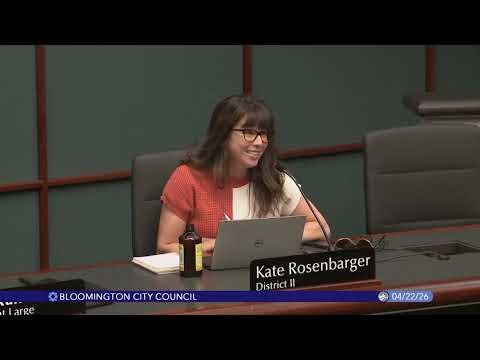
Next steps: The chief said city leadership (including the mayor) has directed the department to discontinue use of any Flock product; the council asked for follow‑up information on termination timing, contract liabilities and options for public reporting of historical queries. The council also passed a formal motion earlier in the meeting to allow the focused public comment so residents could raise concerns directly with the department.
What’s next: Officials said the LPR contract expires at the end of the weekend and streams were turned off; council members asked the administration to provide a written timeline for hardware deactivation and an outline of a public‑reporting approach for audit results.