Get Full Government Meeting Transcripts, Videos, & Alerts Forever!
Get email alerts on the State Policy Tier System topic
No spam. Unsubscribe anytime.
Chamber urges Currituck to join regional push to reform statetier system
Summary
Currituck Chamber president Oneita Krauss asked the board to back a resolution and join a CurrituckCamden Coastal Infrastructure Coalition to seek legislative and federal fixes for how the state's tier ranking limits access to infrastructure grants for coastal counties.
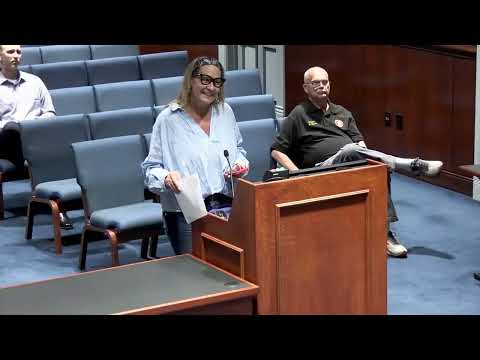
Oneita Krauss, speaking for the Currituck Chamber, urged the Currituck County Board of Commissioners on April 20 to adopt a resolution backing changes to North Carolinathe state's county tier system and to join a regional coalition with Camden County to press lawmakers for reform.
Krauss said the tier formula (known historically as the William S. Lee Act) no longer fits coastal counties whose seasonal and visitor-driven economies skew the statedata used to rank counties for grant eligibility. "We are asking the state and the federal government to recognize the structural inequities and fix it," she told the board. She said Currituck sends an estimated $85 million to $110 million in state tax revenue annually but does not receive commensurate capital support for roads, water and emergency services that visitors and vacation-home valuations increase.
Why it matters: Krauss argued the tier designation blocks state grants that would pay for costly island and peninsula infrastructure (sewer, water, roads), and that growth on the mainland (not tourism) is straining Moyock-area infrastructure. She proposed a three-part strategy: adopt a local resolution, form a CurrituckCamden Coastal Infrastructure Coalition to pursue state lobbying and federal EDA/Infrastructure Act alignment, and support specific bills under consideration (HB 649 to study and redesign the formula; SB 557 to separate water/sewer/health programs from the tier mechanism; HB 99 to create a State Infrastructure Bank offering low-interest loans).
Board response and next steps: Commissioners praised the presentation and told Krauss they would review an updated resolution and consider adopting it at the next meeting. Krauss said the Currituck Chamber's board has already passed a version and that she will present the coalition proposal to Camden County on May 4.
Additional context: Krauss asked the board to support public education and data-driven research (including engagement with UNC-led initiatives) to show how the tier metrics misrepresent local fiscal burdens; she also recommended coordinating with state and federal legislators to align grant programs with real infrastructure costs.