Get Full Government Meeting Transcripts, Videos, & Alerts Forever!
Get email alerts on the Menhaden Moratorium topic
No spam. Unsubscribe anytime.
VMRC denies petition to impose temporary moratorium on Chesapeake Bay menhaden reduction fishing
Summary
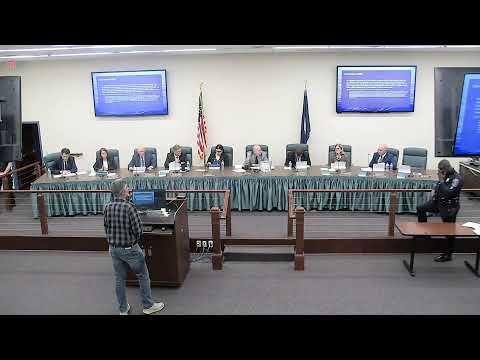
After hours of testimony from fishermen, conservation groups and industry, the Virginia Marine Resources Commission voted 6–2 to deny a petition asking the agency to pause industrial menhaden reduction fishing in the Chesapeake Bay until bay‑specific abundance and impact data are collected.
The Virginia Marine Resources Commission voted 6–2 on April 21 to deny a petition that sought a temporary moratorium on menhaden reduction fishing in the Chesapeake Bay.
The petition, filed as Rulemaking Petition No. 449 by Tanya O'Connor, asked the Commission to pause industrial purse‑seine reduction fishing until Virginia has bay‑specific data on menhaden abundance and the ecological impacts of removals. O'Connor argued that the Commonwealth's own scientific advisor, the Virginia Institute of Marine Science, has described bay‑level menhaden data as “woefully inadequate,” and said that state law (citing Va. Code 28.2‑203 and 28.2‑204.1) requires management decisions be based on abundance and impact at the bay scale.
O'Connor told the Commission that, without those data, the agency cannot legally and responsibly authorize industrial fishing, and asked that VMRC initiate rulemaking to pause the reduction fishery until the required science is in hand.
Staff and agency experts responded that Virginia relies on coast‑wide assessments and multi‑species ecosystem reference points developed through the Atlantic States Marine Fisheries Commission (ASMFC) and the Mid‑Atlantic Fishery Management Council. VMRC staff described the catch and sampling programs used to support assessments, explained how new bay‑scale data might be incorporated into future benchmark reviews, and noted that ASMFC work (including an addendum to Amendment 3) is already underway to consider Bay‑cap allocation and other measures.
Public testimony lasted several hours with a sharply divided record. Conservation groups, recreational anglers and many local residents urged precautionary action, pointing to long‑term declines in some predator indicators (striped bass recruitment, osprey productivity) and local reports of fewer menhaden schools. Industry representatives, watermen and workers from processing plants warned that a moratorium would have immediate economic consequences for small towns such as Reedville and would endanger seafood and processing jobs.
In deliberations commissioners repeatedly referenced the statutory standard that VMRC must use the best scientific information available. Some members emphasized the legal argument that lacking bay‑specific abundance data could justify more precaution; others said the best available coast‑wide assessments and the ASMFC process currently provide the scientific basis for state management. After an amendment to change the timing of any potential action failed, the motion to deny the petition passed 6–2.
The Commission’s written decision will be published in the Virginia Register of Regulations. Petitioners and commenters said they expect continued efforts — legislative and scientific — to fill data gaps and that the debate is likely to return to the Commission or to courts in the months ahead.
The vote leaves in place existing management and the ASMFC process for menhaden; VMRC staff said they will continue coordinating with ASMFC and VIMS on Addendum 2 and further bay‑scale research priorities.