Get Full Government Meeting Transcripts, Videos, & Alerts Forever!
Get email alerts on the Governance topic
No spam. Unsubscribe anytime.
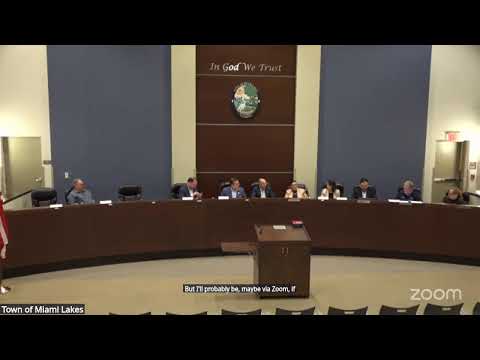
Commission debates limiting council members’ direct contact with staff; attorney to draft two options
Summary
The commission considered charter language that would require council members to route inquiries through the town manager, and whether formal investigations should require a council resolution; the manager and several commissioners favored preserving routine inquiry rights while reserving formal investigations for a body vote.
The Miami Lakes Charter Revision Commission examined proposed charter language intended to preserve the town manager’s operational control over staff while clarifying when the council may request investigations.
Town Attorney summarized the draft provision that would require council interactions with town employees to be conducted “solely through the manager,” except for “inquiries and investigations made in good faith.” That exception—tied in the draft to an explicit council resolution for formal investigations—prompted disagreement among commissioners.
Commissioner Ruano argued routine constituent‑driven inquiries should not be constrained. “Anything that hinders the possibility of a council member asking a question… is not directing staff, it’s not requesting special projects, it’s asking a general question,” Ruano said, describing past experience where the ability to ask staff directly (while copying the manager) helped constituents. The town manager countered that channeling formal requests through the manager protects staff from undue pressure and preserves accountability: “When it became that the member of the council is acting as a representative of the town… staff members get concerned, they get intimidated… I’d rather be the buffer for them,” he said.
Outcome and next steps: Commissioners asked the town attorney to draft two variants for the commission’s review: one that keeps a resolution requirement for formal investigations (and clarifies scope for routine, personal‑capacity inquiries) and one that removes the resolution requirement but tightens the definition of prohibited direction to staff. Commissioners also asked that the language allow the town manager to designate a delegate when absent.
Why it matters: The provision bridges two priorities—protecting staff from being issued operational direction by individual elected members, while preserving elected officials’ ability to obtain timely information from departments on constituent matters. The attorney will circulate redlines before the next meeting.