Get Full Government Meeting Transcripts, Videos, & Alerts Forever!
Get email alerts on the Elections topic
No spam. Unsubscribe anytime.
Miami Lakes commission debates moving primaries, top-two rules after clerk cites high runoff costs
Summary
Commissioners reviewed 2024 turnout and cost figures and asked the attorney to draft language for two options: an August primary that advances the top two to November, or an August primary that elects a candidate who achieves 50%+1. A separate motion to raise the recall-petition threshold failed.
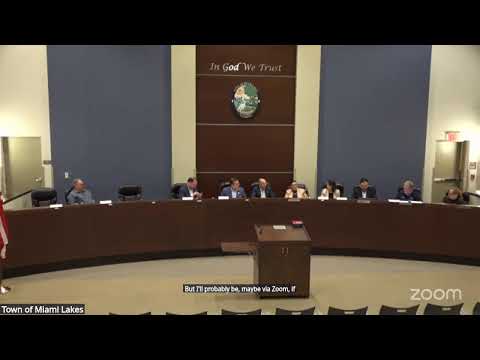
The Miami Lakes Charter Revision Commission spent much of its session on election timing and procedures, focusing on whether to move some races to an August primary and how to handle runoffs.
Madam Clerk reported turnout and cost figures from the town’s 2024 mayoral cycle and urged the commission to consider calendar alignment. “The primary election held August 20, 2024, the total votes was 4,935,” the clerk said, and she reported the Nov. 26, 2024 runoff recorded 3,994 votes. She told commissioners the stand‑alone runoff cost the town about $50,000, while the Nov. 5 general election—held concurrently with a presidential contest and thus “piggybacked”—had a much lower per‑voter cost (the clerk’s transcript of the general‑election total and cost contains formatting errors and was noted as garbled in the meeting record).
Why it matters: commissioners and staff said calendar and cost tradeoffs matter for turnout and municipal budgets. Town Manager cautioned that adding early voting to any standalone runoff would raise the cost substantially: “I think the real number should be somewhere in the $70,000–$80,000 range,” he said, arguing that the $50,000 figure the clerk cited did not include early voting and therefore may understate typical runoff costs.
Discussion and options: commissioners pressed the clerk and attorney on two draft approaches the commission asked the town attorney to prepare for the next meeting: 1) an August primary that advances the top two vote‑getters to the November municipal general election regardless of whether any candidate wins a majority in August; or 2) an August primary that concludes the contest if a candidate receives 50%+1, eliminating the need for a later runoff. Supporters of the top‑two approach argued it preserves broader November turnout while still using an August ballot when more than two candidates run; opponents said awarding the office in August when fewer voters participate could deny the larger November electorate a deciding say.
Recall threshold vote: the clerk and attorney also reviewed state guidance about recall petitions. A motion to amend the charter’s recall threshold (section 2.7) from the town’s current 10% to 15% was made and seconded, but after debate the motion failed on a voice vote and the charter text remained unchanged.
What’s next: Commissioners asked the town attorney to draft redline ballot language showing both primary models (top‑two and a 50% decisive primary), to clarify qualifying windows, and to propose a concise special‑election timetable so a resign‑to‑run vacancy could feasibly be filled on a near‑term ballot. The commission set follow‑up for its next session.