Get Full Government Meeting Transcripts, Videos, & Alerts Forever!
Get email alerts on the Lwrp topic
No spam. Unsubscribe anytime.
Advisory board seeks clear triggers for LWRP review as dock applications rise
Summary
Grand Island advisory members urged a short, staff-usable checklist and a simple flowchart to decide which shoreline projects must undergo Local Waterfront Revitalization Program (LWRP) consistency review, recommending routine open-pile docks be exempt from full committee review unless they affect wetlands or cross creeks.
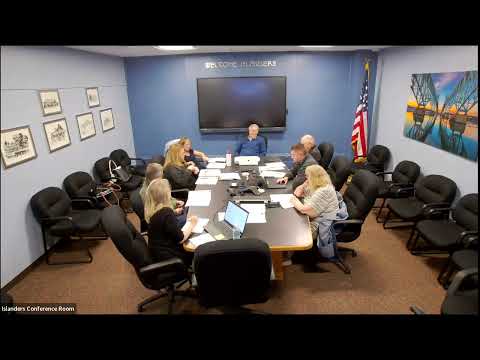
Advisory board members on Grand Island spent most of the meeting pressing for simpler, more consistent rules to decide when waterfront projects must trigger a Local Waterfront Revitalization Program (LWRP) consistency review. Staff and volunteers said the current process has produced confusion and uneven outcomes, with routine dock applications sometimes cycling through multiple reviews while more consequential changes risk slipping through.
The conversation began after a staff member said Ron in building services had told the group he had "never seen so many" repeat dock applications in recent months and asked for a short, usable checklist to determine what needs committee attention and what can be approved administratively. Members proposed a two-track approach: a short best-management-practices (BMP) checklist to speed approval of routine open-pile docks (erosion control, staging, revegetation and basic sediment protections) and a mandatory referral to the LWRP review process when proposals alter wetlands, divert streams, involve dredging or otherwise extend beyond the ordinary shoreline footprint.
Rhonda, who led the design/performance standards discussion, urged the group to add legislative and zoning changes to the list of triggers. "One of the triggers I really think needs to be added to here is any legislation change," she said, arguing advisory boards should get notice of proposals that could affect many committees at once. Members debated numeric thresholds (5,000 square feet, 20% change, 10-acre subdivisions) and whether cumulative incremental changes at a single site should be treated differently from one-off proposals.
Several participants stressed implementation must match the guidance. They recommended producing a single flowchart and a short "taped-to-the-wall" checklist for Ron and other first-line reviewers, and convening a short working meeting of staff (building, zoning, engineering) plus one or two board liaisons to pilot the checklist on real cases. That meeting, participants said, should occur during daytime hours so department staff are available without overtime.
The board also reviewed how federal and state permits interact with local LWRP obligations: applicants typically still need coastal zone certification even if they have Army Corps or NYS DEC permits. Members concluded that staff should include a short note in the checklist reminding applicants about parallel federal/state streams and the town's certification requirement so applicants understand sequencing.
Next steps agreed by the board included drafting a compact trigger list and BMP checklist to test with Ron and representatives from zoning and engineering, and returning to the advisory group with a refined flowchart. The board made a procedural motion to approve the minutes and adjourned after routine announcements.