Get Full Government Meeting Transcripts, Videos, & Alerts Forever!
Get email alerts on the Municipal Budget topic
No spam. Unsubscribe anytime.
Campton Hills staff outlines FY2027 budget shortfall as local use tax plunges; trustees discuss using road-user fees and reimbursements
Summary
At a public hearing on the proposed FY2027 budget, staff reported a roughly $88,000 draft shortfall across village funds and flagged a steep decline in local use tax revenue (from about $416,000 in FY24 to $29,000 budgeted for FY27). Trustees discussed reimbursing the general fund with new user fees, moving prior-year road expenses into capital accounts, and expanding truck enforcement to recover road damages.
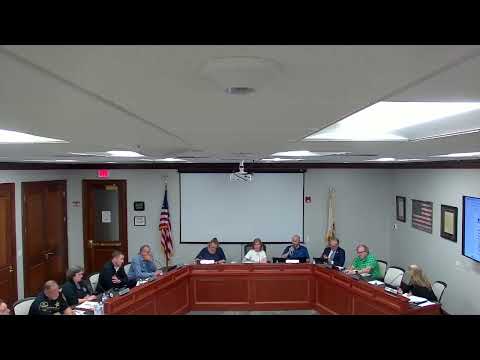
The Village of Campton Hills opened a public hearing April 21 on the draft fiscal year 2027 budget and received a staff presentation that outlined projected deficits, falling use-tax receipts, and options trustees might use to shore up operating funds.
Russ, the village staff presenter, walked the board through fund-by-fund projections, saying the general fund shows revenues of about $3.187 million against expenditures of about $3.611 million in an early draft, motor fuel tax and road & bridge funds carry gaps, and the capital projects fund is projected to have an inter-year surplus. He said the draft did not yet include the police pension numbers and that some previous road-related expenditures had not been properly journaled into the motor fuel tax or capital projects funds.
Russ highlighted a major revenue shift: local use-tax receipts fell sharply from about $416,000 in FY24 to a budgeted $29,000 for FY27, a drop of roughly $400,000 that he said has created a structural deficit and will require either new revenues or expense adjustments going forward. "There's been a huge decrease in local use taxes which has really hurt in terms of our revenues," Russ said during the overview.
Trustees asked staff to explore several options: moving previously miscoded road expenditures (approximately $900,000 referenced for FY26) out of the Motor Fuel Tax (MFT) fund into the capital projects fund and restoring the motor fuel balance via correct journal entries; using new user-fee revenue dedicated to roads to partially reimburse the general fund for earlier transfers; and identifying prior years’ transfers so the board can consider reimbursements to the general fund from the capital or user-fee monies. Staff agreed to prepare a short analysis of the last two–three years of road-related transfers for trustees to review.
Trustees also discussed increasing targeted police enforcement around overweight trucks to reduce road damage and raise modest revenue. The police chief said truck enforcement is not intended as a revenue generator, but as a way to protect pavement and capture fees from violators who damage roads. "I would say conservatively, yes, $50,000," the chief said when asked about what focused truck enforcement could realistically recover during the spring-summer construction season.
Public commenters raised local issues related to drainage and road funding: a resident urged action on stormwater and blocked streams affecting Coron Road and Fair Oaks; another urged the village to consider moving capital funds to reimburse the general fund for road expenditures and to delay any pension tax until the village tightens expense control.
The board closed the public hearing but did not take final action on the FY2027 ordinance that night, saying additional review and a finance-committee meeting were scheduled to work through the deficit and accounting questions before a vote.