Get Full Government Meeting Transcripts, Videos, & Alerts Forever!
Get email alerts on the Surveillance Policy topic
No spam. Unsubscribe anytime.
Urbana council debates defining 'exigent circumstances' in draft surveillance ordinance
Summary
Councilmembers debated whether the ordinance should treat exigent circumstances as a high 'disaster' threshold or a lower police operational standard. Some urged allowing certain emergency uses (search and rescue, missing persons) as authorized policy uses with limited reporting; others favored keeping a lower threshold for life‑and‑limb responses with guardrails and defined decision‑makers.
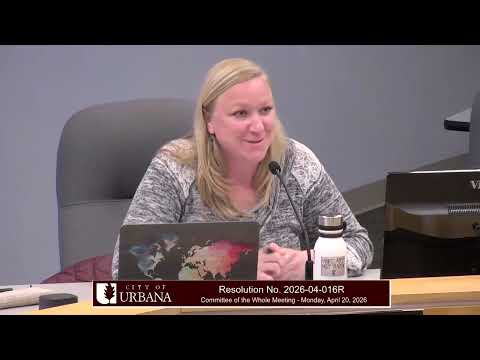
Councilmembers spent a substantial portion of the April 20 Committee of the Whole meeting debating how to define and govern 'exigent circumstances' in a draft surveillance ordinance and in accompanying departmental policies.
Councilmember Grace asked that the council clarify whether exigent circumstances should mean a high threshold ("disaster"‑level events requiring mayoral declaration and 30‑day reporting) or a lower police‑operational threshold that could be used more routinely. Grace said routinely triggering extra reporting could create a heavy administrative burden for the police department and suggested treating some responses — for example, search and rescue or missing/endangered persons — as authorized uses under policy without requiring repeated exigent‑circumstance reports.
Councilmember Kusenberg said the council should preserve authority to use novel technologies when immediate action is needed to protect life and limb; he said the mayor could be an appropriate decision‑maker for activating an exigent exception in rare circumstances. Several members agreed that the ordinance must distinguish technologies already covered by policy (drones with a search‑and‑rescue policy) from technologies not yet considered, and that the ordinance’s language should include guardrails to prevent routine or repeated bypassing of Council oversight.
Staff said they will provide a side‑by‑side comparison of recommended edits after internal review (legal, police and other departments) and before the next meeting. Councilmembers asked that the draft policy be displayed while discussing the specific language. No formal vote on the ordinance occurred during the committee meeting.