Get Full Government Meeting Transcripts, Videos, & Alerts Forever!
Get email alerts on the Community Center Feasibility topic
No spam. Unsubscribe anytime.
North St. Paul council reviews feasibility study showing roughly $3 million local gap to reopen community center
Summary
Consultants told the City Council that renovating the former community center would cost about $6.5 million in hard construction, with $5.3 million in grants already secured; after soft costs the city’s share was estimated in the $2.9M–$3.1M range, and council directed a month of public engagement before acting.
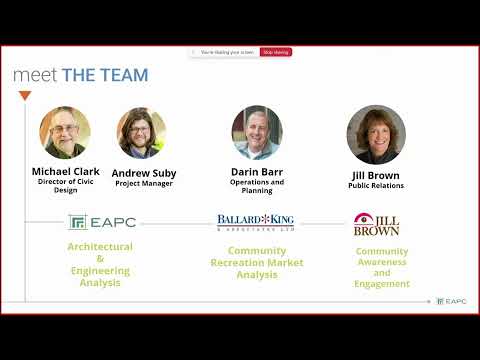
Consultants from EAPC Architects & Engineers told the North St. Paul City Council on June 17 that renovating the city’s former community center would require substantial work and a significant local investment even with $5.3 million in state and federal grants already secured. Mike Clark, director of EAPC’s civic design group, summarized that the consultants’ hard‑construction estimate is about $6.5 million and, after typical soft costs and allowances (including a $250,000 gym floor allowance), the city’s additional capital need was presented in a range of roughly $2.88 million to about $3.075 million.
The study, which includes analysis by Ballard King and Associates, examined building condition, market demand and operating models. Ballard King consultant Darren Bar said the city’s population alone is “small, way too small of a population” to fully sustain a 30,000‑square‑foot center and recommended drawing users from a broader 10‑minute drive area or offering unique programming to attract regional users.
Why it matters: the grants carry conditions that affect design and operations and could be clawed back if the facility does not meet requirements. Consultants said the grants support design, construction, furnishing and equipment but require the facility to remain in service for a minimum period (consultants identified a 20‑year requirement tied to grant repayment risk). They also warned that federal Davis‑Bacon prevailing‑wage rules and the state’s B3 sustainability standards will raise construction and equipment costs.
Key figures and scenarios: consultants presented multiple operating models to show the fiscal implications to the city. If the Ramsey County Library remains the only paying tenant, the estimated annual city subsidy would be roughly $379,000. A partial‑tenant scenario lowers the subsidy to about $302,375; a fully leased recreational tenant scenario was estimated to reduce the subsidy to roughly $55,325. If the city instead runs the recreation operation directly, the presenters estimated an annual subsidy in the roughly $258,690 range, reflecting higher staffing and operational costs. Consultants also reported a deferred‑maintenance package (roof, windows, HVAC, electrical) that is the central driver of near‑term capital need.
Options evaluated included fully demolishing the building (estimated demolition cost ~ $250,000; rebuilding a new facility was cited at $14–$18 million, or $9–$13 million with grant funding), removing the gym and keeping the library (presented as an $8.1 million option that would forfeit some grants), or leasing the building while retaining specific recreational elements (leasing agents were discussed; typical fees cited were about $1 per square foot per year).
Council members pressed on affordability and timing. A councilor asked whether the city could borrow $3 million; Dan, the city’s finance director, said borrowing is possible but warned that adding $3 million of debt could affect the city’s bond rating (he said it might drop from A+ to AA), which would increase borrowing costs. Councilors repeatedly emphasized the city’s existing capital needs (roads, parks, other municipal buildings) and asked for public input on trade‑offs.
The study also flagged a lease timing issue for the library: consultants said the library’s current lease arrangement likely does not include rental payments until about 2027 and that the library may have a no‑rent arrangement through 2030, limiting near‑term rental revenue assumptions.
What happens next: the council agreed to a roughly one‑month public engagement period with broad, non‑leading questions about programming priorities and acceptable trade‑offs, and directed staff and consultants to return in August with community feedback and recommendations. No formal decision to accept grants or begin construction was made at the June 17 workshop.
Quotes from the meeting (verbatim): “We end up with a total project of $3.075 million would be the projected cost,” Mike Clark said. Ballard King consultant Darren Bar said the local population for a 30,000‑square‑foot building is “small, way too small of a population.” The presenters also warned that accepting state funds would require compliance with the state’s B3 sustainability program and that federal funds carry Davis‑Bacon wage requirements.
Council procedural notes: the council unanimously adopted the workshop agenda at the start of the meeting, and later voted to adjourn after the presentation and discussion. Consultants offered to take a few resident questions outside the public forum after adjournment.
The council is scheduled to receive the results of public engagement and the consultants’ follow‑up in August.