Get Full Government Meeting Transcripts, Videos, & Alerts Forever!
Get email alerts on the Teacher Compensation topic
No spam. Unsubscribe anytime.
Parents and students urge board to prioritize teacher pay as district faces cuts
Summary
Dozens of students, parents and educators urged the Ann Arbor Public Schools board to prioritize teacher compensation and reverse budget choices they say have hollowed out classrooms, citing canceled clubs, rising class sizes and low morale while proposing a Citizens Finance Advisory Committee.
Dozens of parents, students and school staff pressed the Ann Arbor Public Schools Board of Education to prioritize teacher compensation and reverse budget choices they said are harming classroom learning.
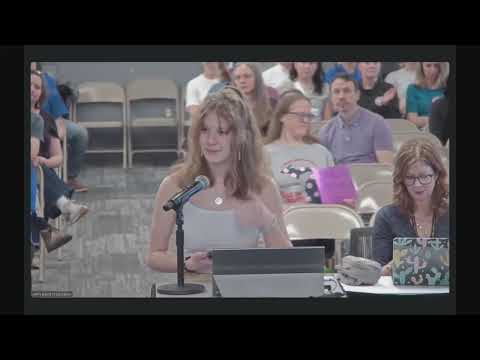
At the public-comment portion of the board's April 22 meeting, speakers described teachers working without a contract for more than 100 days, canceled extracurriculars and a wave of departures to higher-paying neighboring districts. “Teachers deserve a better contract,” said Carolyn Hutchinson, a Pioneer High School sophomore, who told trustees the district has had to cut “approximately $25 million” from the 2024–25 operating budget and that cuts have disproportionately affected arts and “less valued” extracurriculars.
Parents and students gave concrete examples of the disruption. Ben Szymanski, a parent, said his daughter’s school has lost multiple teachers in recent years and said the current negotiation timeline is eroding confidence in the district’s ability to retain staff. Student speakers said canceled clubs and lost office hours have removed supports that a generation of students relied on.
Several speakers linked compensation to district budget priorities. Angela Prince, a Pioneer graduate and parent, said APS receives more general fund revenue per student than some peers and proposed that the board authorize a Citizens Finance Advisory Committee to analyze spending patterns, benchmark against neighboring districts, and recommend budget priorities aimed at “budgeting teachers first.” Prince said the committee should meet regularly with the CFO and include 6–8 community members with financial expertise.
Union and staff representatives also reported continuing bargaining activity. Fred Klein, identified as EA president, told the board the union had signed a tentative agreement to take to members for ratification and outlined a ratification schedule; he said membership would vote online and the outcome would be communicated to the district after the vote closes. Paraeducator and support-staff leaders described low morale and persistent vacancies that they linked to pay and workload.
Board members did not respond during the public-comment period; Superintendent Jaz Parks later offered clarifications. Parks said district leadership is “absolutely committed” to long-term financial planning that includes prioritizing competitive compensation and that reductions in central-office headcount in recent years mean the district is not overstaffed relative to comparator districts. Parks also said district leaders will review a reported event at Skyline High School and follow up with details.
What happens next
Trustees acknowledged the breadth of public concern and received a roster of proposed next steps: (1) the superintendent and staff will follow up on the Skyline event inquiry; (2) the EA membership will finish its ratification process and report results to the district; and (3) community members urged the board to consider standing advisory oversight such as the proposed Citizens Finance Advisory Committee. The meeting adjourned to closed session at 9:48 p.m.; no board action on a new contract was recorded during the public meeting.