Get Full Government Meeting Transcripts, Videos, & Alerts Forever!
Get email alerts on the Brownfield Redevelopment topic
No spam. Unsubscribe anytime.
Phase 2 assessment finds Old Salvage Yard suitable for redevelopment, council hears
Summary
A city-commissioned Phase 2 environmental site assessment for the Lawrence Old Salvage Yard detected barium and arsenic at levels staff described as below thresholds of concern and recommended removing debris, conducting a boundary survey and pursuing rezoning to enable future sale and housing or mixed use.
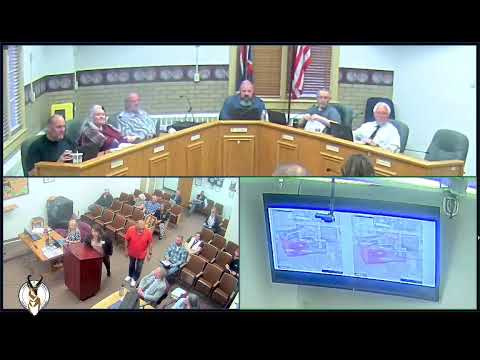
City staff and environmental consultants told the Rawlins City Council on April 21 that a Phase 2 environmental site assessment (ESA) at the Lawrence Old Salvage Yard found contaminant levels staff said do not preclude redevelopment.
Christina, the consultant presenting the report, said barium was detected at 310 milligrams per kilogram, well under the Wyoming Department of Quality (WDQ) residential reference cited in the presentation of 15,000 mg/kg, and arsenic readings included values such as 5.68 and 7.82 mg/kg. Christina noted that arsenic occurs widely across Wyoming because of the state’s mining geology and that the DEQ typically regards background values in the 1–10 mg/kg range in the state. She said the totality of the Phase 2 results led the team to conclude the property is usable and can be sold or repurposed for most municipal or private development uses.
Mayor Pro Tim and city staff outlined next steps that the council discussed: removing visible debris (staff said public works will haul tires from the site), ordering a meets-and-bounds boundary survey, and initiating rezoning for the lower portion of the parcel toward residential uses and retaining commercial/industrial zoning on the upper portion to align with Cedar Street and adjacent railroad-owned industrial parcels. City staff emphasized the council’s prior intent when the city bought the site: to clean it up and re-sell it rather than retain it as a long-term city-owned parcel.
Council members debated the best long-term use. Some members supported using the lower, flatter area for housing — including mobile homes or multifamily units — and reserving the higher, top portion for C2 commercial uses, which the staff noted can allow mixed residential/commercial projects. Other councillors raised the idea of using part of the site for expanded parking and event staging near the fairgrounds but were reminded that much of the immediate area is privately or railroad owned and that the city’s stated plan is to return the property to the private market once cleaned and surveyed.
The presentation included technical clarifications: surface soils were sampled at recommended depths (0–6 inches) for volatile organic compounds and deeper borings down to about 15 feet for other analyses; lab results and supporting tables were available in the full report provided to council. Christina and staff said the detected metals were below levels that would require restrictive land-use controls under the referenced screening criteria and that the Phase 2 results allow typical redevelopment pathways, subject to any further conditions identified in a formal cleanup or deed restrictions if later determined necessary.
Council directed staff to proceed with the boundary survey, removal of visible debris, and steps to begin rezoning discussions with planning and zoning. The consultant and staff said they would bring further details back to council as the geotechnical survey and rezoning plan advance.