Get Full Government Meeting Transcripts, Videos, & Alerts Forever!
Get email alerts on the Zoning Ordinance topic
No spam. Unsubscribe anytime.
Polk County commissioners approve zoning ordinance updates addressing definitions, wetlands and floodplain fencing
Summary
After a public hearing, Polk County commissioners adopted a package of zoning ordinance amendments clarifying variance standards, defining 'change of use,' raising some accessory‑structure exemptions and adding land‑alteration rules for public water wetlands and fence standards in the 100‑year floodplain.
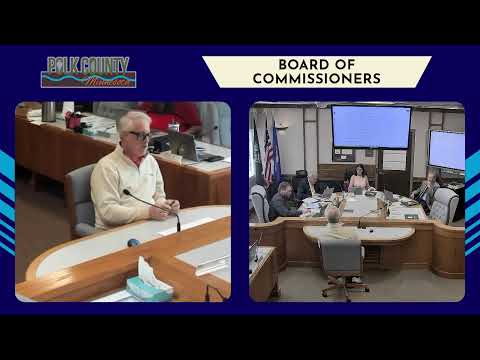
Polk County commissioners on Tuesday adopted a set of amendments to the county zoning ordinance after a brief public hearing. The changes, proposed by county planning staff and reviewed March 27 by the county planning commission, revise definitions, permit standards and floodplain and wetland rules.
Planning staff explained the package, including a clerical correction in the subdivision section, a change in variance language to align with state law by replacing the term 'hardship' with 'practical difficulty,' and a new definition of 'change of use' that clarifies when converting an accessory structure (for example, a shed) into a dwelling requires a permit. "Economic considerations alone shall not constitute a practical difficulty if a reasonable use for the property exists under the terms of the ordinance," the planner said when reading the updated definition.
Other changes include raising the no‑permit threshold for a single‑story accessory structure in the agricultural district from 100 to 200 square feet (matching current state building code practice for exempt structures), adding a new section that applies shoreland‑style land‑alteration permitting to public water wetlands, and standards for fencing in the 100‑year floodplain designed to prevent fences or walls from redirecting flood flows to neighboring parcels.
Planner Jake, who presented the amendments during the hearing, said the wetlands language formalizes practices the county has followed for about a decade and places the rules in ordinance text so applicants and staff rely on consistent standards rather than ad hoc best‑management practices. On fencing, the new standard allows permeable options such as chain‑link but requires that privacy or solid fences be installed so they do not block flow (base flood elevation plus 1.5 feet was cited as a design reference).
The public hearing was opened by motion at 10:00 a.m. and closed at 10:21 a.m.; there was no substantive public testimony recorded in the transcript. The board then voted by voice to adopt the amendments (motion carried). No effective date was specified in the meeting discussion.
The decision changes routine expectations for landowners and contractors in shoreland, wetland and floodplain areas and clarifies how the county will treat conversion of accessory structures into dwellings and similar 'change of use' matters. The county said staff will return the ordinance for any required ministerial steps to publish and implement the changes.