Get Full Government Meeting Transcripts, Videos, & Alerts Forever!
Get email alerts on the Social Services topic
No spam. Unsubscribe anytime.
CAN launches 'Impact' program to help families above traditional poverty thresholds
Summary
Janelle Lawson of the Community Action Agency of New Haven describes a new program, Impact, aimed at families above 150% of the federal poverty line; CAN will also embed financial literacy and housing-stability work across its programs in a five-year strategic plan.
Janelle Lawson, deputy director and vice president of human resources at the Community Action Agency of New Haven (CAN), said the agency has launched a program called Impact to help families who fall above traditional eligibility limits but still face immediate needs. “Impact does is help families that don't traditionally come into our organization get assistance with either housing, basic needs … or assistance with their utility bills or if they have a need with medical. we can help them with a small portion just to make it easier for them at this time,” Lawson said.
CAN traces its roots to nearly five decades of local service. “We've been a staple in the New Haven community for over 48 years,” Lawson said, noting that the agency serves low- and moderate-income households in New Haven, West Haven, North Haven, East Haven and Hampton and that it serves “over 10,000 families” in what she described as a nine-month period of service activity.
Lawson said the Impact program is intended to reach households that do not meet CAN’s existing income thresholds (she cited the 150% of the federal poverty line cutoff as a reference) but still face gaps—shortfalls in rent, food and utility payments or urgent medical costs—that a small, targeted payment or referral can relieve. “We like to give what we call the virtual hug where we wrap services around families,” Lawson said, describing a model that combines direct assistance with referrals; she added that CAN maintains a partner network of more than 350 organizations for referrals.
As part of a planned five-year strategic update, Lawson said CAN will embed financial-literacy instruction and housing-stability work across roughly 15 existing programs so clients leave services with budgeting and housing-retention tools. “So when someone goes out the door, they're well equipped to know how a budget actually works and how they can pay themsel[f] first and still survive while maintaining their household,” she said.
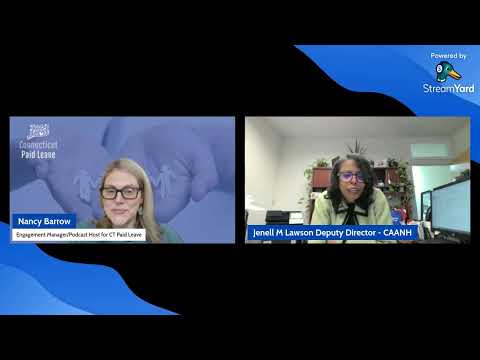
For callers seeking help, Lawson provided phone-based contact options and directed listeners to CAN’s website for information and referrals. The interview was recorded for Connecticut Paid Leave’s Five Minutes of Impact series; host Nancy Barrow identified herself as engagement and podcast director for Connecticut Paid Leave and closed the segment by directing listeners to the podcast for a deeper dive.
The program’s rollout is an internal initiative described during this interview; Lawson did not specify a public launch date, staffing changes, or the exact dollar amounts available per household.