Get Full Government Meeting Transcripts, Videos, & Alerts Forever!
Get email alerts on the Ethics topic
No spam. Unsubscribe anytime.
Encinitas residents demand removal of EUAC member after social‑media post; council declines to act for lack of second
Summary
After hours of public testimony calling for the removal of advisory committee member Steven Hobec over a Facebook post residents described as racially demeaning, the council member who introduced the removal motion did not secure a second; a Title VI grievance is pending and staff will issue findings.
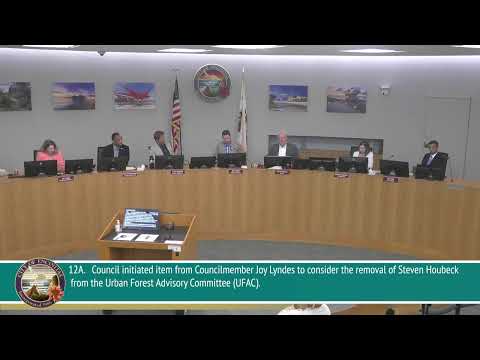
Encinitas — A packed chamber and more than an hour of public testimony marked a council‑initiated discussion about whether to remove Environmental Urban Forestry Advisory Committee (EUAC) member Steven Hobec following complaints about a Facebook post many residents called racially demeaning.
Council Member Joy Lines brought the item after multiple community members asked the council to consider Hobec’s removal. The public record included a recorded statement from Hobec and extensive testimony from parents, cultural practitioners and civil‑rights advocates who said the post and related comments demeaned African and African‑American performance tradition, harmed students and performers, and warranted removal. Several speakers urged a zero‑tolerance standard for public appointees who use racialized language; others urged restorative processes. A Title VI civil‑rights grievance had been filed and staff reported an administrative review would produce written findings by April 29 (staff view: public record will be issued), which the council acknowledged.
Council members debated whether Hobec’s apology was sufficient, whether the matter should be treated as a personnel/ethical removal (commissions serve at council pleasure), and the city’s obligation to follow complaint investigation processes before acting. Council Member Lines moved to remove Hobec from EUAC; the motion was not seconded and therefore failed for lack of a second. Council members emphasized the pendency of the Title VI process and the need to respect investigatory findings; several council members also urged continued community dialogue and restorative engagement.
What’s next: Staff will issue the Title VI finding as a public record; the council may revisit membership decisions after the administrative finding or if additional substantiated incidents occur.