Get Full Government Meeting Transcripts, Videos, & Alerts Forever!
Get email alerts on the Development Debate topic
No spam. Unsubscribe anytime.
Hundreds of residents oppose Deep Green data center as developers pledge enforceable protections
Summary
Hundreds of Lansing residents filled the council chamber to oppose the proposed sale of a downtown lot to Deep Green for a fuel‑cell data center; developers and BWL officials presented technical safeguards and contractual guarantees but no final city sale vote occurred.
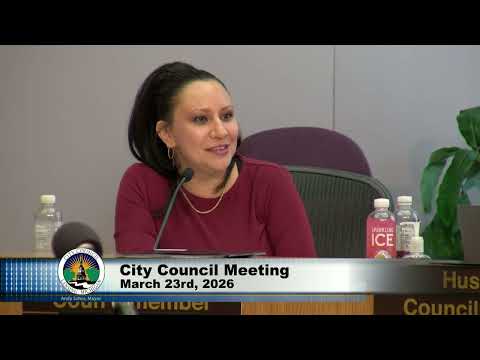
Hundreds of residents, students and union members packed the March 23 Lansing City Council meeting to oppose a proposed sale of city property to Deep Green for a data center that would include an on‑site fuel‑cell power plant and a commitment to provide heat to the Board of Water and Light’s downtown hot‑water network.
The hearing opened with council staff noting the sale (Act Seven 2025) would include a $1.4 million purchase price, a commitment of at least 15 full‑time jobs and a 24‑month city right to buy back the land if work did not commence. Dozens of speakers took more than two hours to deliver testimony for and against the proposal.
Residents and youth organizers urged the council to reject the rezoning and sale or to require a legally binding community benefits agreement (CBA). Opponents cited environmental risks, noise and water use, and questioned the project’s fit for a downtown riverfront site. "There is no legally binding community benefits agreement, and everything they tell us is based on faith," said Ela Veronica Garza, a nearby resident. Several speakers pointed to Bloom Energy’s past regulatory troubles; those claims were made as public testimony and not adjudicated during the meeting.
Supporters and union representatives said the project would bring construction and long‑term service jobs and generate new tax revenue. "This is a $120 million commitment," a proponent said during public comment, urging council to keep the process moving. Local union speakers told the council Deep Green had committed to union construction work and a multiyear maintenance contract that would provide local employment.
Developers from Deep Green returned to the council with a prepared presentation and technical team. Spokesman Matt Cracks said the planned 24 MVA facility would use closed‑loop liquid cooling ("no additional water is added to the data center to move that around") and that heat recovered from the servers would be supplied to BWL at no infrastructure charge. Legal counsel Elizabeth Rogers said key protections are in the buy‑sell agreement and site‑plan review: "We must adhere to downtown core noise limits," she told council, and the city retains site‑plan review and buy‑back rights. Bloom Energy’s vice president for environment and regulatory affairs, Marissa Blackshear, described multiple layers of monitoring and emergency shutoffs and said systems would be remote‑monitored and subject to first‑responder review.
Councilmembers pressed the Deep Green team on enforceability, noise modeling, the mechanics of the proposed 20‑year BWL purchase agreement and how taxes would be treated in TIF capture for downtown projects. The Deep Green team said the project would pay required power infrastructure costs up front and would not seek local tax abatements.
No final council vote on the sale occurred at the March 23 meeting. The presentation and extensive public comment were part of the record ahead of an upcoming public hearing. Mayor and council members also noted that materials submitted to the city and the buy‑sell agreement will be part of the public record for review before any final vote.
What’s next: The council scheduled additional hearings and review steps; if the city proceeds, approvals would include site‑plan review, building permits and separate votes on any sale or rezoning required by ordinance. Public commenters insisted the city require enforceable, monitored commitments — for example, a CBA or contractual language that explicitly ties environmental and community protections to the purchase agreement.