Get Full Government Meeting Transcripts, Videos, & Alerts Forever!
Get email alerts on the Transportation topic
No spam. Unsubscribe anytime.
Jersey City switches City Bike contract to Lyft; administration says deal removes city subsidy and adds modest revenue share
Summary
The city presented a three-year no-cost contract with Lyft to operate City Bike in Jersey City and Hoboken; the contract eliminates a prior annual subsidy and gives Jersey City 1% of revenue above $2 million (split with Hoboken), with estimated city revenue of $8,000–$12,000 annually. Council asked for five-year revenue and cost history, ridership-origin data, dock maps, and safety/enforcement statistics.
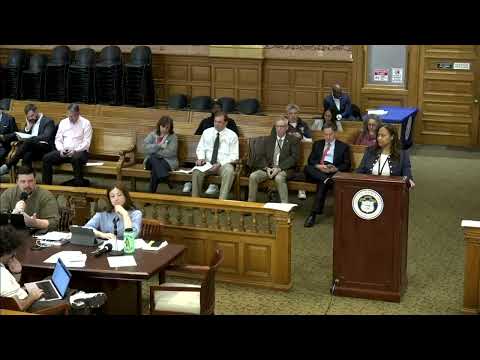
City transportation staff told council on April 20 that a competitively procured concession contract will award Lyft the bike- and scooter-share concession for Jersey City and Hoboken for three years with two one-year extensions. The administration said the contract is structured at no cost to the city and includes a modest revenue share: the city receives 1% of Lyft’s annual system revenue above $2 million, split with Hoboken according to origin-based ridership (Jersey City historically comprises about 60% of trips).
Transportation planner Eli Gusman said the change reflects a transition from a prior contract that required a city subsidy (roughly $200,000 net after revenue-share effects in recent years and historically about $400,000 in direct costs). Under the new Lyft terms, the administration expects to be net positive because the city will no longer pay the operating subsidy; staff estimated a Jersey City share of $8,000–$12,000 per year under the revenue-share threshold.
Council members requested supporting data. Multiple members asked for five years of City Bike revenue and expense history, the amount the city paid under the prior contract, and ridership details by docking-origin to confirm the 60/40 split with Hoboken. They also asked for maps of docks, details of any expansion plans (staff said expansion is not included in this contract but is being pursued separately with grant funding), information on enforcement and violations for bike rules, and whether Lyft’s in-app education and Vision Zero partner efforts will address helmet use and delivery-rider safety.
Staff said the revenue split calculation counts the origin of rides (a trip that begins in Jersey City counts as Jersey City ridership) and that five-year historical numbers and the administrative budget line showing previous subsidies will be provided to the council. Staff also said the contract aligns its expiration with the New York City City Bike arrangement so the municipalities can negotiate concurrent changes when larger contracts come up for renewal. The caucus did not take a final vote in the caucus session; the administration expects to bring the item to the council meeting for formal action.