Get Full Government Meeting Transcripts, Videos, & Alerts Forever!
Get email alerts on the Public Safety topic
No spam. Unsubscribe anytime.
Council presses administration for costs, staffing and reimbursement plan tied to FIFA security radios
Summary
At the April 20 caucus the Jersey City administration outlined two radio purchases for Emergency Services Unit use at World Cup events, funded by a 2024 UASI grant; council members asked for officer counts, overtime estimates, grant balances and whether FIFA would reimburse city costs. Staff said radios meet state and interagency interoperability standards and will provide more detailed cost projections at the next meeting.
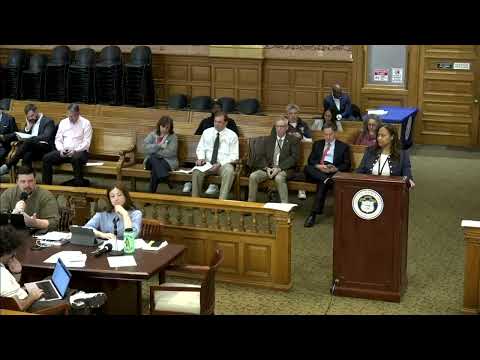
The Jersey City Municipal Council on April 20 questioned the administration about equipment and likely personnel costs tied to the city’s security obligations for upcoming FIFA events.
Director Bob (last name not stated) of Public Safety and staff told council members the administration will purchase rugged 700–800 MHz radios and accessories from PMC Associates under state contract for the Emergency Services Unit using a 2024 UASI (urban area security initiative) grant, and separately buy six tri-band Motorola radios with special cellular messaging and encryption for ESU personnel assigned to FIFA-related duties. Both purchases were presented as grant-funded with no cost to the city. The PMC radios were described as roughly $2,300 apiece; the Motorola set for the special ESU team was listed at $84,891.
Council members pressed for operational details. “How many of our officers are going to be assigned to the World Cup?” a council member asked, requesting an estimate of officers expected to be working outside the city and the projected overtime cost. Council members also asked whether FIFA will cover officer overtime or other local costs tied to the event. Administration staff said the state police are coordinating the larger security effort across multiple counties and agencies, and that they would deliver an estimate of numbers, expected overtime, and the UASI grant balances before the council’s next meeting.
Council members signaled they want the administration to pursue reimbursement where possible. “We are in a budget crisis,” one council member said, urging staff to press FIFA or the state to pay event-related expenses. Administration officials agreed to look for applicable legal avenues and to report back with the grant’s remaining funds, a description of what the UASI grant allows, and an estimate of anticipated overtime and ancillary costs associated with officers who will be deployed in support of FIFA operations.
The council also discussed creating a small group of council members to serve as liaisons on FIFA-related matters so the body has a point of contact to follow up with state and event organizers. The caucus did not take a formal vote on the purchases; staff characterized the radio buys as required to meet interoperability and encryption standards set for multi-agency operations.